Download for free now
Thank you! Your submission has been received!
Oops! Something went wrong while submitting the form.


.jpg)
By the time a refurbishment reaches design development, many of the choices that will shape its next phase are already being locked in. Handover still matters, but it cannot be the only focus. The brief needs to look ahead, anticipating future team changes, technology upgrades and reconfiguration before they happen.
This is often where waste begins. Early decisions such as fixed layouts, hard-to-access services, fragile finishes, highly bespoke furniture or poor record-keeping make future change difficult. Once these are built in, adapting the space becomes disruptive and wasteful. Walls are knocked down, products are replaced and perfectly usable materials leave the building simply because they cannot be easily identified, removed or reused.
With the right approach, an office can do more. It can adapt, be taken apart, repaired and refreshed. It can stay useful well beyond its first phase of use.
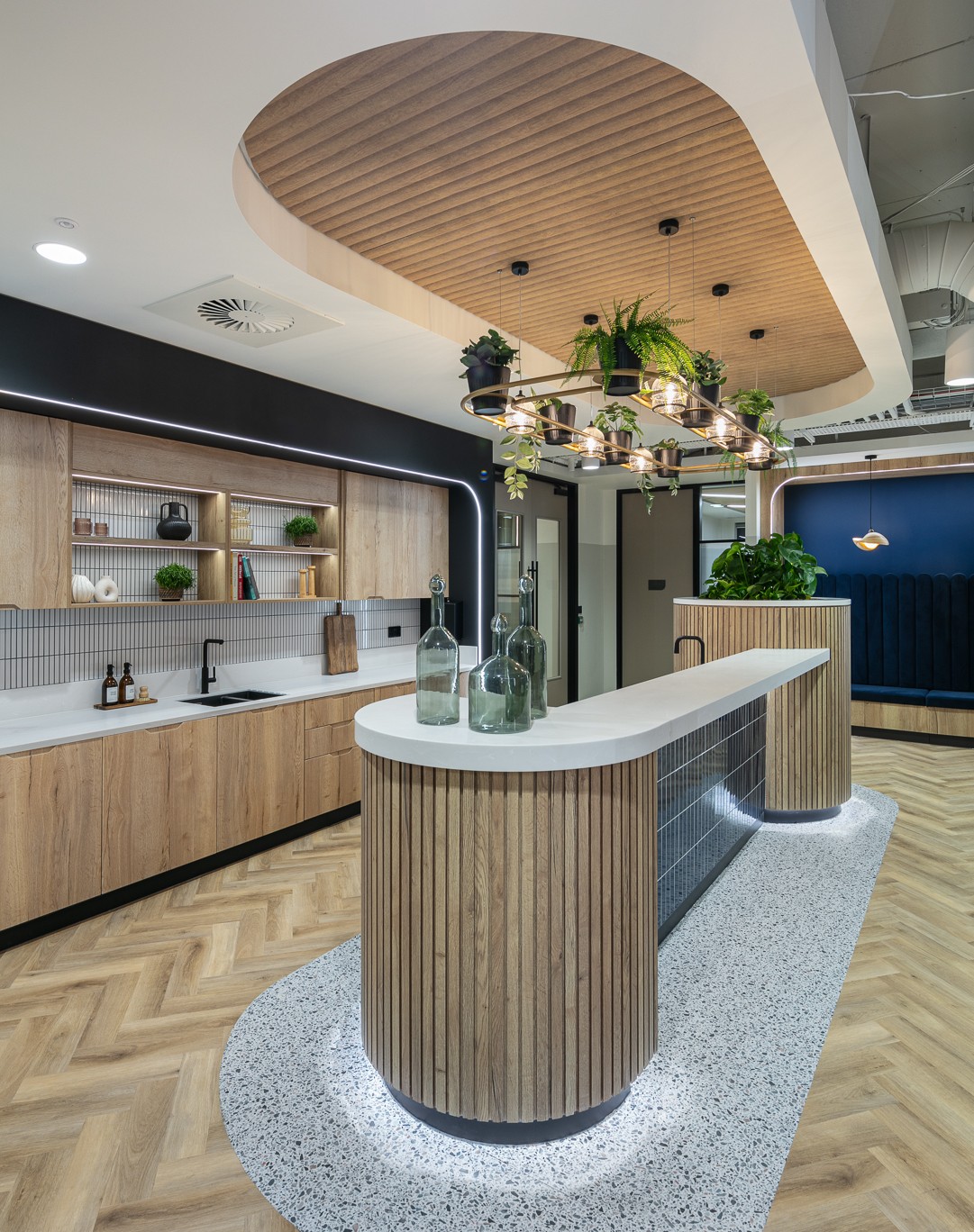
In a workplace refurbishment, circularity isn't abstract. It shows up in everyday decisions. A circular office is designed so it can:
Not everything needs to be modular or reusable, but future change should always be part of the design conversation from day one.
A good brief recognises that churn is normal. Teams move, technology evolves and layouts change. Treating these as exceptions is what creates waste.
For occupiers, circularity is as much a business issue as an environmental one.
When a workplace can adapt easily, change is less disruptive. Moves, layout tweaks or new project spaces don't automatically mean major works. In a live office, that matters. Noise, downtime and operational friction all have real impacts.
It also gives more flexibility at key points like lease events or consolidation. Reusable partitions, movable furniture and accessible services make change easier, whereas fixed fit outs can limit options.
From an environmental perspective, the biggest benefit is often the waste that never happens. Fit outs regularly remove items that are still perfectly usable, simply because they no longer fit the layout or brief. Keeping materials in use for longer avoids unnecessary replacement and supports reuse.
Future change becomes easier when certain decisions are taken early.
Enclosed spaces rarely stay the same forever. Designing partitions so they can be taken down and reused without damage makes a big difference. Modular systems and simple fixing methods allow layouts to evolve without creating waste, but this needs to be considered early.
A layout may look adaptable, but services often dictate what's possible. Power, data, lighting and ventilation need to be planned so they don't lock the space into one configuration. Accessible routes and sensible zoning help future changes happen without major disruption.
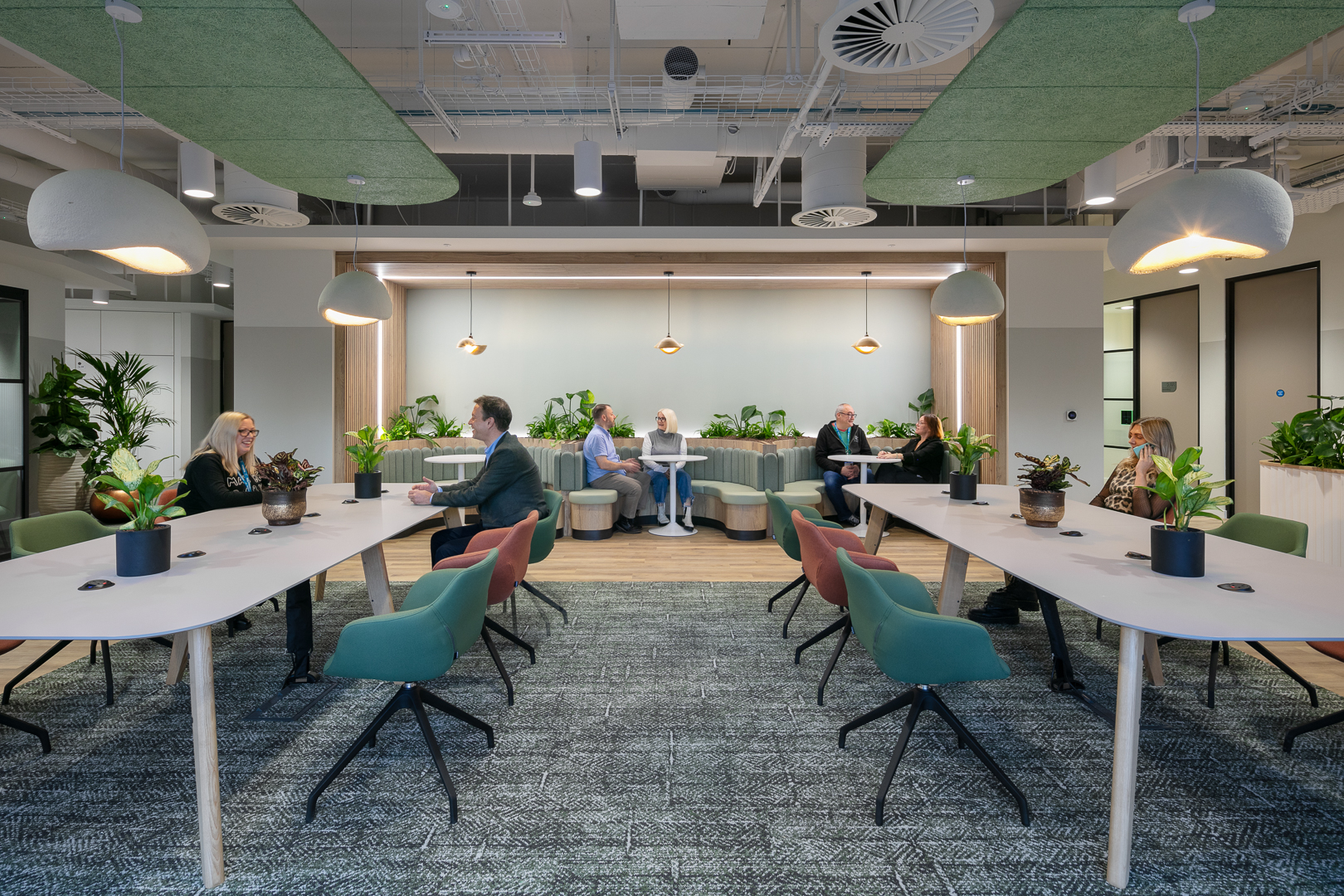
Furniture is often the first thing affected by change. Specifying systems that can be repaired, reconfigured or refreshed extends their life. Standardisation across an estate also makes it easier to move items between teams, floors or sites.
Finishes need to perform over time, not just look good at handover. Durable, repairable materials that can be maintained or refreshed locally reduce the need for full replacement.
Reuse only works if you know what you have. Asset registers or material passports help track products, their condition and how they can be reused. These
records need to be maintained after handover to stay useful.
Layouts should be able to absorb normal organisational change. That might mean flexible neighbourhoods, adaptable meeting spaces and shared facilities that can evolve as needs shift.
Circularity can easily fall away if it isn't built into the brief and decision-making.
Known future changes like headcount shifts, lease milestones or technology upgrades should be factored in early. Cost still matters, but so does the longer-term impact of churn, replacement and waste.
Standardisation can support reuse at scale, especially for larger occupiers. Procurement also plays a role by specifying repair options, spare parts and take-back schemes upfront.
Just as importantly, asset information needs to be actively managed after handover. Without it, the next refurbishment starts from scratch again.
.jpg)
To test whether a project is genuinely circular, it helps to ask:
Change is inevitable. Whether it's team structure, technology, a lease decision or a shift in how people use the office, something will drive the next update.
Circular thinking brings that reality forward into the brief, while there's still time to influence the outcome. It helps create workplaces that are easier to adapt, maintain and reuse, rather than ones that need to be stripped out and rebuilt.
It doesn't remove uncertainty, but it does give the workplace a better chance of staying relevant, and avoids waste that never needed to exist in the first place.
By the time a refurbishment reaches design development, many of the choices that will shape its next phase are already being locked in. Handover still matters, but it cannot be the only focus. The brief needs to look ahead, anticipating future team changes, technology upgrades and reconfiguration before they happen.
This is often where waste begins. Early decisions such as fixed layouts, hard-to-access services, fragile finishes, highly bespoke furniture or poor record-keeping make future change difficult. Once these are built in, adapting the space becomes disruptive and wasteful. Walls are knocked down, products are replaced and perfectly usable materials leave the building simply because they cannot be easily identified, removed or reused.
With the right approach, an office can do more. It can adapt, be taken apart, repaired and refreshed. It can stay useful well beyond its first phase of use.
In a workplace refurbishment, circularity isn't abstract. It shows up in everyday decisions. A circular office is designed so it can:
Not everything needs to be modular or reusable, but future change should always be part of the design conversation from day one.
A good brief recognises that churn is normal. Teams move, technology evolves and layouts change. Treating these as exceptions is what creates waste.
For occupiers, circularity is as much a business issue as an environmental one.
When a workplace can adapt easily, change is less disruptive. Moves, layout tweaks or new project spaces don't automatically mean major works. In a live office, that matters. Noise, downtime and operational friction all have real impacts.
It also gives more flexibility at key points like lease events or consolidation. Reusable partitions, movable furniture and accessible services make change easier, whereas fixed fit outs can limit options.
From an environmental perspective, the biggest benefit is often the waste that never happens. Fit outs regularly remove items that are still perfectly usable, simply because they no longer fit the layout or brief. Keeping materials in use for longer avoids unnecessary replacement and supports reuse.
Future change becomes easier when certain decisions are taken early.
Enclosed spaces rarely stay the same forever. Designing partitions so they can be taken down and reused without damage makes a big difference. Modular systems and simple fixing methods allow layouts to evolve without creating waste, but this needs to be considered early.
A layout may look adaptable, but services often dictate what's possible. Power, data, lighting and ventilation need to be planned so they don't lock the space into one configuration. Accessible routes and sensible zoning help future changes happen without major disruption.
Furniture is often the first thing affected by change. Specifying systems that can be repaired, reconfigured or refreshed extends their life. Standardisation across an estate also makes it easier to move items between teams, floors or sites.
Finishes need to perform over time, not just look good at handover. Durable, repairable materials that can be maintained or refreshed locally reduce the need for full replacement.
Reuse only works if you know what you have. Asset registers or material passports help track products, their condition and how they can be reused. These
records need to be maintained after handover to stay useful.
Layouts should be able to absorb normal organisational change. That might mean flexible neighbourhoods, adaptable meeting spaces and shared facilities that can evolve as needs shift.
Circularity can easily fall away if it isn't built into the brief and decision-making.
Known future changes like headcount shifts, lease milestones or technology upgrades should be factored in early. Cost still matters, but so does the longer-term impact of churn, replacement and waste.
Standardisation can support reuse at scale, especially for larger occupiers. Procurement also plays a role by specifying repair options, spare parts and take-back schemes upfront.
Just as importantly, asset information needs to be actively managed after handover. Without it, the next refurbishment starts from scratch again.
To test whether a project is genuinely circular, it helps to ask:
Change is inevitable. Whether it's team structure, technology, a lease decision or a shift in how people use the office, something will drive the next update.
Circular thinking brings that reality forward into the brief, while there's still time to influence the outcome. It helps create workplaces that are easier to adapt, maintain and reuse, rather than ones that need to be stripped out and rebuilt.
It doesn't remove uncertainty, but it does give the workplace a better chance of staying relevant, and avoids waste that never needed to exist in the first place.

By the time a refurbishment reaches design development, many of the choices that will shape its next phase are already being locked in. Handover still matters, but it cannot be the only focus. The brief needs to look ahead, anticipating future team changes, technology upgrades and reconfiguration before they happen.
This is often where waste begins. Early decisions such as fixed layouts, hard-to-access services, fragile finishes, highly bespoke furniture or poor record-keeping make future change difficult. Once these are built in, adapting the space becomes disruptive and wasteful. Walls are knocked down, products are replaced and perfectly usable materials leave the building simply because they cannot be easily identified, removed or reused.
With the right approach, an office can do more. It can adapt, be taken apart, repaired and refreshed. It can stay useful well beyond its first phase of use.
In a workplace refurbishment, circularity isn't abstract. It shows up in everyday decisions. A circular office is designed so it can:
Not everything needs to be modular or reusable, but future change should always be part of the design conversation from day one.
A good brief recognises that churn is normal. Teams move, technology evolves and layouts change. Treating these as exceptions is what creates waste.
For occupiers, circularity is as much a business issue as an environmental one.
When a workplace can adapt easily, change is less disruptive. Moves, layout tweaks or new project spaces don't automatically mean major works. In a live office, that matters. Noise, downtime and operational friction all have real impacts.
It also gives more flexibility at key points like lease events or consolidation. Reusable partitions, movable furniture and accessible services make change easier, whereas fixed fit outs can limit options.
From an environmental perspective, the biggest benefit is often the waste that never happens. Fit outs regularly remove items that are still perfectly usable, simply because they no longer fit the layout or brief. Keeping materials in use for longer avoids unnecessary replacement and supports reuse.
Future change becomes easier when certain decisions are taken early.
Enclosed spaces rarely stay the same forever. Designing partitions so they can be taken down and reused without damage makes a big difference. Modular systems and simple fixing methods allow layouts to evolve without creating waste, but this needs to be considered early.
A layout may look adaptable, but services often dictate what's possible. Power, data, lighting and ventilation need to be planned so they don't lock the space into one configuration. Accessible routes and sensible zoning help future changes happen without major disruption.
Furniture is often the first thing affected by change. Specifying systems that can be repaired, reconfigured or refreshed extends their life. Standardisation across an estate also makes it easier to move items between teams, floors or sites.
Finishes need to perform over time, not just look good at handover. Durable, repairable materials that can be maintained or refreshed locally reduce the need for full replacement.
Reuse only works if you know what you have. Asset registers or material passports help track products, their condition and how they can be reused. These
records need to be maintained after handover to stay useful.
Layouts should be able to absorb normal organisational change. That might mean flexible neighbourhoods, adaptable meeting spaces and shared facilities that can evolve as needs shift.
Circularity can easily fall away if it isn't built into the brief and decision-making.
Known future changes like headcount shifts, lease milestones or technology upgrades should be factored in early. Cost still matters, but so does the longer-term impact of churn, replacement and waste.
Standardisation can support reuse at scale, especially for larger occupiers. Procurement also plays a role by specifying repair options, spare parts and take-back schemes upfront.
Just as importantly, asset information needs to be actively managed after handover. Without it, the next refurbishment starts from scratch again.
To test whether a project is genuinely circular, it helps to ask:
Change is inevitable. Whether it's team structure, technology, a lease decision or a shift in how people use the office, something will drive the next update.
Circular thinking brings that reality forward into the brief, while there's still time to influence the outcome. It helps create workplaces that are easier to adapt, maintain and reuse, rather than ones that need to be stripped out and rebuilt.
It doesn't remove uncertainty, but it does give the workplace a better chance of staying relevant, and avoids waste that never needed to exist in the first place.