


Download for free now
Thank you! Your submission has been received!
Oops! Something went wrong while submitting the form.


The most resilient organisations aren’t choosing between wellbeing, experience or sustainability - they’re aligning them.
When strategies for culture, physical space, and environmental impact are siloed, they underdeliver. A workplace may feel inclusive but lack environmental integrity. A sustainable office may be efficient, but emotionally disconnected. Culture might be prioritised, but without the right design, it rarely sticks.
True performance emerges when these factors work in concert - intentionally, not incidentally.
This article explores how forward-thinking organisations are designing alignment across every level of the workplace - through leadership, infrastructure, and strategic clarity.
Workplaces are no longer just environments for work - they are expressions of strategy. The best aren’t built on one agenda. They’re shaped by the intersection of employee needs, brand values, and long-term impact.
As expectations around environmental, social, and governance (ESG) performance grow, workplace design has become a critical lens through which stakeholders assess credibility. Leaders must now consider how space reflects not only brand, but values. Employees, too, expect workplaces that feel cohesive - where what’s promised in principle is backed up in practice.
Integration isn’t just about compliance or aesthetics - it’s about creating environments that support trust, clarity and accountability. When integration is missing, people notice. And when it’s present, trust grows.
This is especially relevant as organisations face mounting pressure to articulate their employer value proposition (EVP).
A strong EVP no longer rests on salary and perks alone - it must reflect purpose, flexibility, and a demonstrable commitment to people and planet. The workplace becomes one of the most visible expressions of that promise.
And it’s not just internal. Investors, partners and regulators are paying attention too.
The shift toward mandatory sustainability disclosures, growing demands for diversity metrics, and scrutiny of greenwashing all point in the same direction: alignment matters.

Treating people, place, and planet as disconnected priorities creates real challenges:
• Talent drain: People are drawn to workplaces that reflect their values and support their wellbeing. Misaligned strategies can undermine retention.
• Operational friction: Fragmented systems and spaces create inefficiencies, increase absenteeism, and reduce engagement.
• Reputational risk: Clients, partners and investors increasingly view ESG alignment as a core marker of business maturity. Gaps between promise and reality can erode confidence.
Siloed thinking belongs to the past. Integration defines the future.
These risks are no longer theoretical. According to MIT Sloan research, companies with higher ESG performance - especially those aligning workplace strategy with environmental and social goals - consistently outperform peers on innovation and employee engagement.
A workplace that supports all three pillars is no longer a differentiator. It’s an expectation.
Progressive organisations are moving beyond fragmented initiatives and designing alignment into the fabric of their workplace strategies.
That means creating environments where:
• People feel psychologically safe, valued and empowered
• Hospitality principles shape daily experience
• Environmental impact is embedded, not added later
• Leadership practices reflect inclusion and accountability
• Space communicates brand, care and clarity
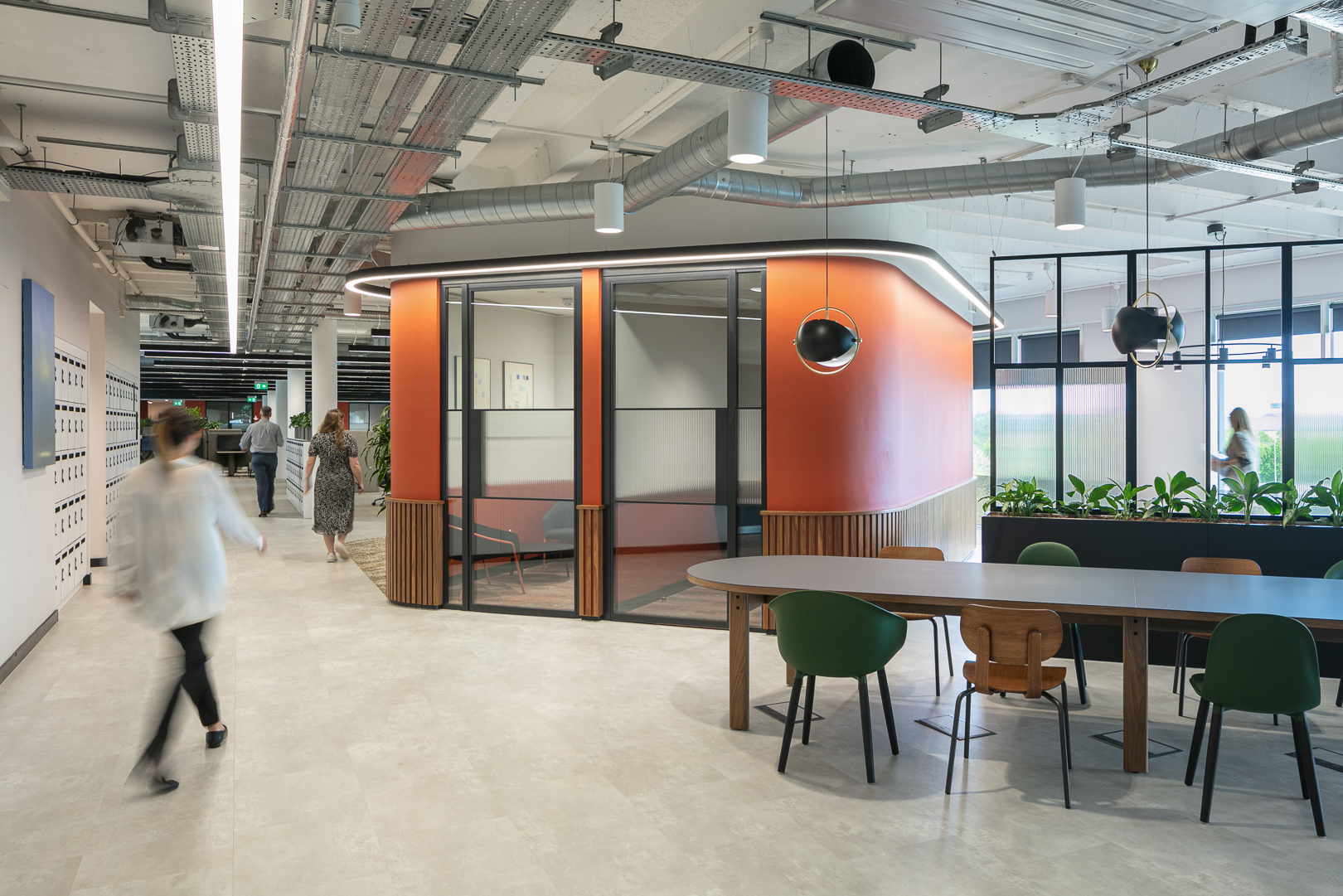
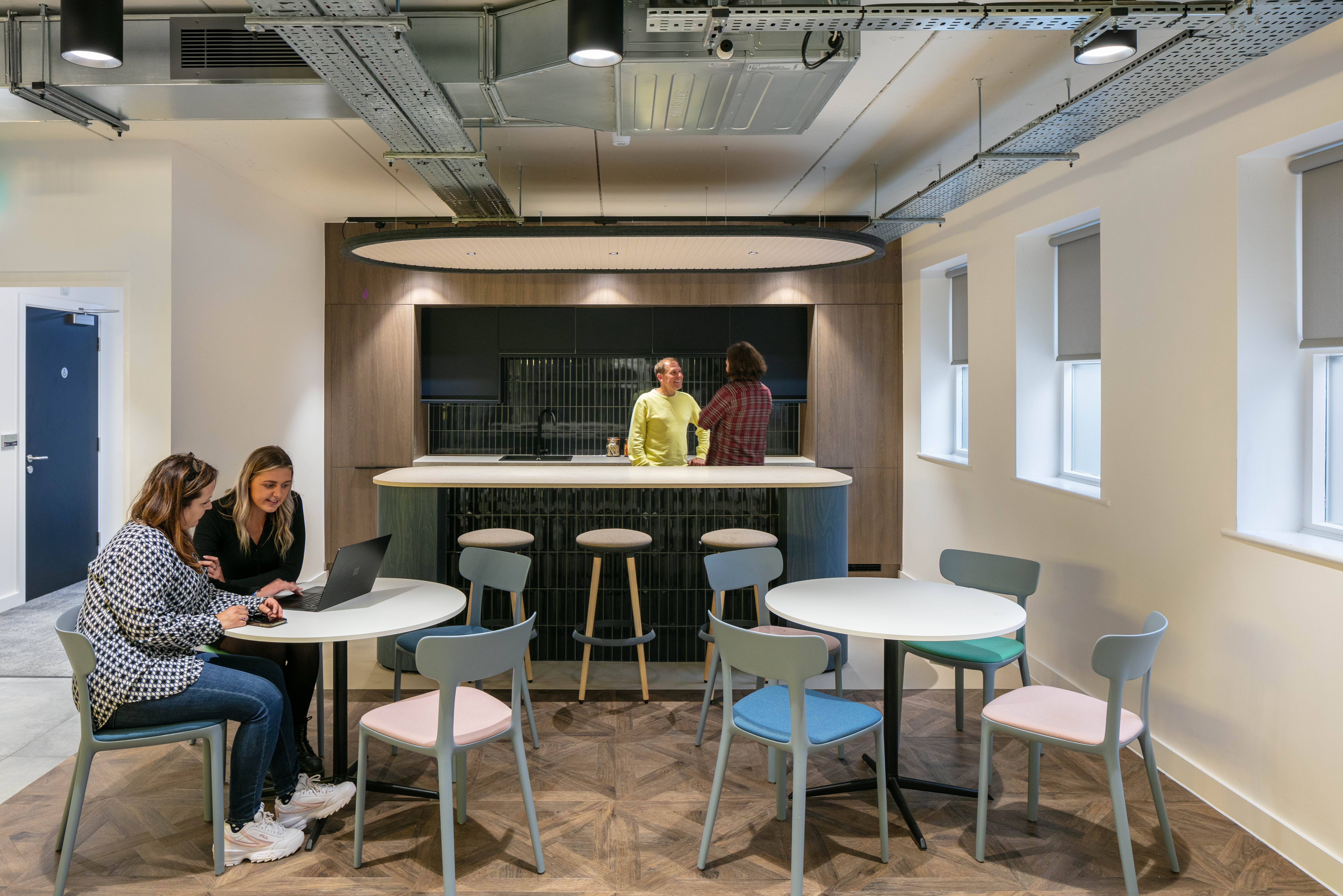
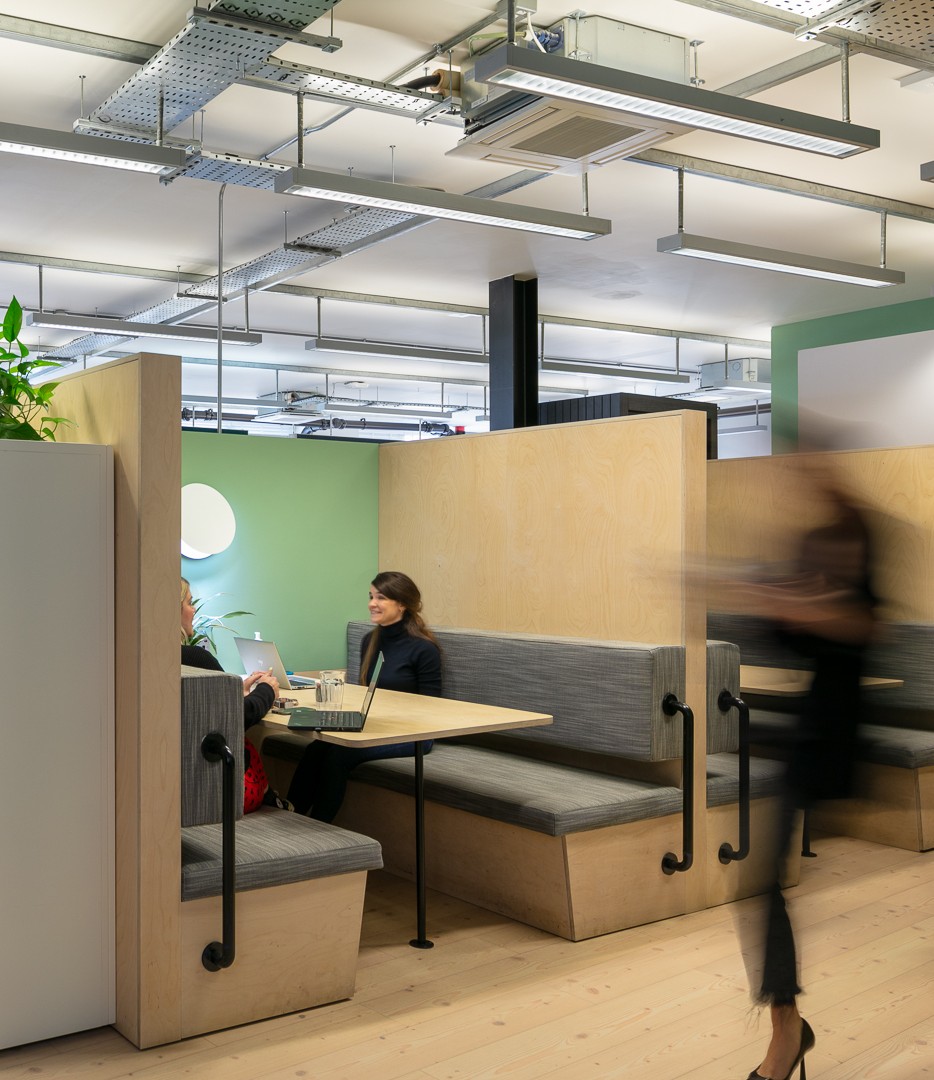
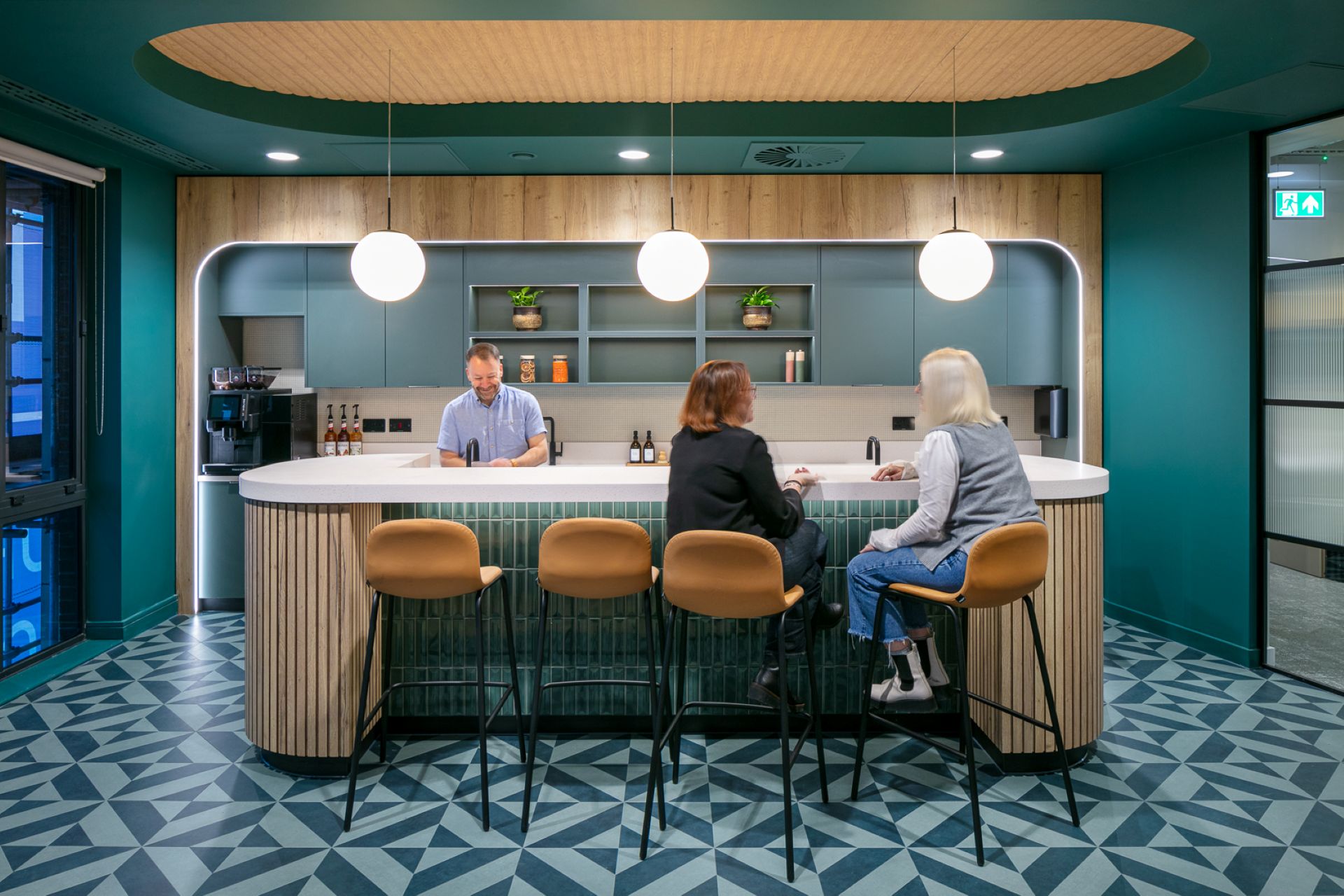
We’ve witnessed the power of integration in our work with the Medical Protection Society (MPS) in Leeds. By reimagining their traditional office, we created a flexible, inclusive environment that supports diverse work styles and well-being. The design not only enhanced employee experience but also achieved significant sustainability milestones, including an EPC Rating B and BREEAM Excellent certification.
This holistic approach demonstrates how aligning culture, design, and sustainability can transform a workplace into a dynamic, future-ready space. Integrated strategy doesn’t require perfection - but it does demand intentionality. Even small changes across culture, systems, or space can have a multiplying effect when made in alignment. Organisations that embed this thinking into decision-making are better equipped to evolve, adapt and lead through complexity.

None of this happens by accident. Integrated workplace strategy requires leaders who:
• Listen to the needs of people and the signals of the environment
• Design boldly for adaptability and authenticity
• Act responsibly, balancing growth with purpose
Leadership plays a pivotal role in modelling integration. It’s not about top-down directives - it’s about the micro-actions that build trust, clarity and cohesion over time.
That includes:
• Empowering cross-functional collaboration between HR, IT, sustainability and real estate teams
• Linking workplace design decisions to wellbeing and inclusion outcomes
• Ensuring accountability for environmental and cultural impact at the senior level
• Regularly gathering and acting on employee feedback to inform design and experience
When leaders champion integration not as a project but as a principle, workplaces become more resilient, adaptive and engaging.
The workplace is one of the most visible expressions of organisational culture. It influences how people feel, how teams function, and how external stakeholders perceive the brand.
This article has explored how inclusion drives productivity, how hospitality-led design enhances belonging, and how sustainability supports wellbeing.
But alignment is the multiplier.
When inclusion, experience, and sustainability strategies are not only present, but working together - they reinforce one another. They signal care, foster innovation, and enable organisations to adapt with purpose.
In a world where disruption is constant, regulation is tightening, and expectations are evolving, integration is no longer optional.
It’s what sets apart workplaces that survive from those that thrive.
The future belongs to those who align their actions with their ambitions - and reflect that clearly in every part of the workplace experience.
The most resilient organisations aren’t choosing between wellbeing, experience or sustainability - they’re aligning them.
When strategies for culture, physical space, and environmental impact are siloed, they underdeliver. A workplace may feel inclusive but lack environmental integrity. A sustainable office may be efficient, but emotionally disconnected. Culture might be prioritised, but without the right design, it rarely sticks.
True performance emerges when these factors work in concert - intentionally, not incidentally.
This article explores how forward-thinking organisations are designing alignment across every level of the workplace - through leadership, infrastructure, and strategic clarity.
Workplaces are no longer just environments for work - they are expressions of strategy. The best aren’t built on one agenda. They’re shaped by the intersection of employee needs, brand values, and long-term impact.
As expectations around environmental, social, and governance (ESG) performance grow, workplace design has become a critical lens through which stakeholders assess credibility. Leaders must now consider how space reflects not only brand, but values. Employees, too, expect workplaces that feel cohesive - where what’s promised in principle is backed up in practice.
Integration isn’t just about compliance or aesthetics - it’s about creating environments that support trust, clarity and accountability. When integration is missing, people notice. And when it’s present, trust grows.
This is especially relevant as organisations face mounting pressure to articulate their employer value proposition (EVP).
A strong EVP no longer rests on salary and perks alone - it must reflect purpose, flexibility, and a demonstrable commitment to people and planet. The workplace becomes one of the most visible expressions of that promise.
And it’s not just internal. Investors, partners and regulators are paying attention too.
The shift toward mandatory sustainability disclosures, growing demands for diversity metrics, and scrutiny of greenwashing all point in the same direction: alignment matters.
Treating people, place, and planet as disconnected priorities creates real challenges:
• Talent drain: People are drawn to workplaces that reflect their values and support their wellbeing. Misaligned strategies can undermine retention.
• Operational friction: Fragmented systems and spaces create inefficiencies, increase absenteeism, and reduce engagement.
• Reputational risk: Clients, partners and investors increasingly view ESG alignment as a core marker of business maturity. Gaps between promise and reality can erode confidence.
Siloed thinking belongs to the past. Integration defines the future.
These risks are no longer theoretical. According to MIT Sloan research, companies with higher ESG performance - especially those aligning workplace strategy with environmental and social goals - consistently outperform peers on innovation and employee engagement.
A workplace that supports all three pillars is no longer a differentiator. It’s an expectation.
Progressive organisations are moving beyond fragmented initiatives and designing alignment into the fabric of their workplace strategies.
That means creating environments where:
• People feel psychologically safe, valued and empowered
• Hospitality principles shape daily experience
• Environmental impact is embedded, not added later
• Leadership practices reflect inclusion and accountability
• Space communicates brand, care and clarity
We’ve witnessed the power of integration in our work with the Medical Protection Society (MPS) in Leeds. By reimagining their traditional office, we created a flexible, inclusive environment that supports diverse work styles and well-being. The design not only enhanced employee experience but also achieved significant sustainability milestones, including an EPC Rating B and BREEAM Excellent certification.
This holistic approach demonstrates how aligning culture, design, and sustainability can transform a workplace into a dynamic, future-ready space. Integrated strategy doesn’t require perfection - but it does demand intentionality. Even small changes across culture, systems, or space can have a multiplying effect when made in alignment. Organisations that embed this thinking into decision-making are better equipped to evolve, adapt and lead through complexity.
None of this happens by accident. Integrated workplace strategy requires leaders who:
• Listen to the needs of people and the signals of the environment
• Design boldly for adaptability and authenticity
• Act responsibly, balancing growth with purpose
Leadership plays a pivotal role in modelling integration. It’s not about top-down directives - it’s about the micro-actions that build trust, clarity and cohesion over time.
That includes:
• Empowering cross-functional collaboration between HR, IT, sustainability and real estate teams
• Linking workplace design decisions to wellbeing and inclusion outcomes
• Ensuring accountability for environmental and cultural impact at the senior level
• Regularly gathering and acting on employee feedback to inform design and experience
When leaders champion integration not as a project but as a principle, workplaces become more resilient, adaptive and engaging.
The workplace is one of the most visible expressions of organisational culture. It influences how people feel, how teams function, and how external stakeholders perceive the brand.
This article has explored how inclusion drives productivity, how hospitality-led design enhances belonging, and how sustainability supports wellbeing.
But alignment is the multiplier.
When inclusion, experience, and sustainability strategies are not only present, but working together - they reinforce one another. They signal care, foster innovation, and enable organisations to adapt with purpose.
In a world where disruption is constant, regulation is tightening, and expectations are evolving, integration is no longer optional.
It’s what sets apart workplaces that survive from those that thrive.
The future belongs to those who align their actions with their ambitions - and reflect that clearly in every part of the workplace experience.
The most resilient organisations aren’t choosing between wellbeing, experience or sustainability - they’re aligning them.
When strategies for culture, physical space, and environmental impact are siloed, they underdeliver. A workplace may feel inclusive but lack environmental integrity. A sustainable office may be efficient, but emotionally disconnected. Culture might be prioritised, but without the right design, it rarely sticks.
True performance emerges when these factors work in concert - intentionally, not incidentally.
This article explores how forward-thinking organisations are designing alignment across every level of the workplace - through leadership, infrastructure, and strategic clarity.
Workplaces are no longer just environments for work - they are expressions of strategy. The best aren’t built on one agenda. They’re shaped by the intersection of employee needs, brand values, and long-term impact.
As expectations around environmental, social, and governance (ESG) performance grow, workplace design has become a critical lens through which stakeholders assess credibility. Leaders must now consider how space reflects not only brand, but values. Employees, too, expect workplaces that feel cohesive - where what’s promised in principle is backed up in practice.
Integration isn’t just about compliance or aesthetics - it’s about creating environments that support trust, clarity and accountability. When integration is missing, people notice. And when it’s present, trust grows.
This is especially relevant as organisations face mounting pressure to articulate their employer value proposition (EVP).
A strong EVP no longer rests on salary and perks alone - it must reflect purpose, flexibility, and a demonstrable commitment to people and planet. The workplace becomes one of the most visible expressions of that promise.
And it’s not just internal. Investors, partners and regulators are paying attention too.
The shift toward mandatory sustainability disclosures, growing demands for diversity metrics, and scrutiny of greenwashing all point in the same direction: alignment matters.
Treating people, place, and planet as disconnected priorities creates real challenges:
• Talent drain: People are drawn to workplaces that reflect their values and support their wellbeing. Misaligned strategies can undermine retention.
• Operational friction: Fragmented systems and spaces create inefficiencies, increase absenteeism, and reduce engagement.
• Reputational risk: Clients, partners and investors increasingly view ESG alignment as a core marker of business maturity. Gaps between promise and reality can erode confidence.
Siloed thinking belongs to the past. Integration defines the future.
These risks are no longer theoretical. According to MIT Sloan research, companies with higher ESG performance - especially those aligning workplace strategy with environmental and social goals - consistently outperform peers on innovation and employee engagement.
A workplace that supports all three pillars is no longer a differentiator. It’s an expectation.
Progressive organisations are moving beyond fragmented initiatives and designing alignment into the fabric of their workplace strategies.
That means creating environments where:
• People feel psychologically safe, valued and empowered
• Hospitality principles shape daily experience
• Environmental impact is embedded, not added later
• Leadership practices reflect inclusion and accountability
• Space communicates brand, care and clarity
We’ve witnessed the power of integration in our work with the Medical Protection Society (MPS) in Leeds. By reimagining their traditional office, we created a flexible, inclusive environment that supports diverse work styles and well-being. The design not only enhanced employee experience but also achieved significant sustainability milestones, including an EPC Rating B and BREEAM Excellent certification.
This holistic approach demonstrates how aligning culture, design, and sustainability can transform a workplace into a dynamic, future-ready space. Integrated strategy doesn’t require perfection - but it does demand intentionality. Even small changes across culture, systems, or space can have a multiplying effect when made in alignment. Organisations that embed this thinking into decision-making are better equipped to evolve, adapt and lead through complexity.
None of this happens by accident. Integrated workplace strategy requires leaders who:
• Listen to the needs of people and the signals of the environment
• Design boldly for adaptability and authenticity
• Act responsibly, balancing growth with purpose
Leadership plays a pivotal role in modelling integration. It’s not about top-down directives - it’s about the micro-actions that build trust, clarity and cohesion over time.
That includes:
• Empowering cross-functional collaboration between HR, IT, sustainability and real estate teams
• Linking workplace design decisions to wellbeing and inclusion outcomes
• Ensuring accountability for environmental and cultural impact at the senior level
• Regularly gathering and acting on employee feedback to inform design and experience
When leaders champion integration not as a project but as a principle, workplaces become more resilient, adaptive and engaging.
The workplace is one of the most visible expressions of organisational culture. It influences how people feel, how teams function, and how external stakeholders perceive the brand.
This article has explored how inclusion drives productivity, how hospitality-led design enhances belonging, and how sustainability supports wellbeing.
But alignment is the multiplier.
When inclusion, experience, and sustainability strategies are not only present, but working together - they reinforce one another. They signal care, foster innovation, and enable organisations to adapt with purpose.
In a world where disruption is constant, regulation is tightening, and expectations are evolving, integration is no longer optional.
It’s what sets apart workplaces that survive from those that thrive.
The future belongs to those who align their actions with their ambitions - and reflect that clearly in every part of the workplace experience.