Download for free now
Thank you! Your submission has been received!
Oops! Something went wrong while submitting the form.


Several forces already reshaping the industry are likely to further define how insurers operate in 2026. Post-M&A consolidation continues to expose the operational and behavioural inconsistencies that come with integrating legacy cultures. Sustainability expectations, from both regulators and stakeholders, are intensifying, making workplace efficiency and environmental credibility board-level priorities.
Hybrid presence, once governed by attendance policies, now requires behavioural clarity from leadership. Generational shifts in workforce expectations are prompting fresh scrutiny of workplace experience. And across the board, the physical environment is becoming a strategic proxy for organisational identity.
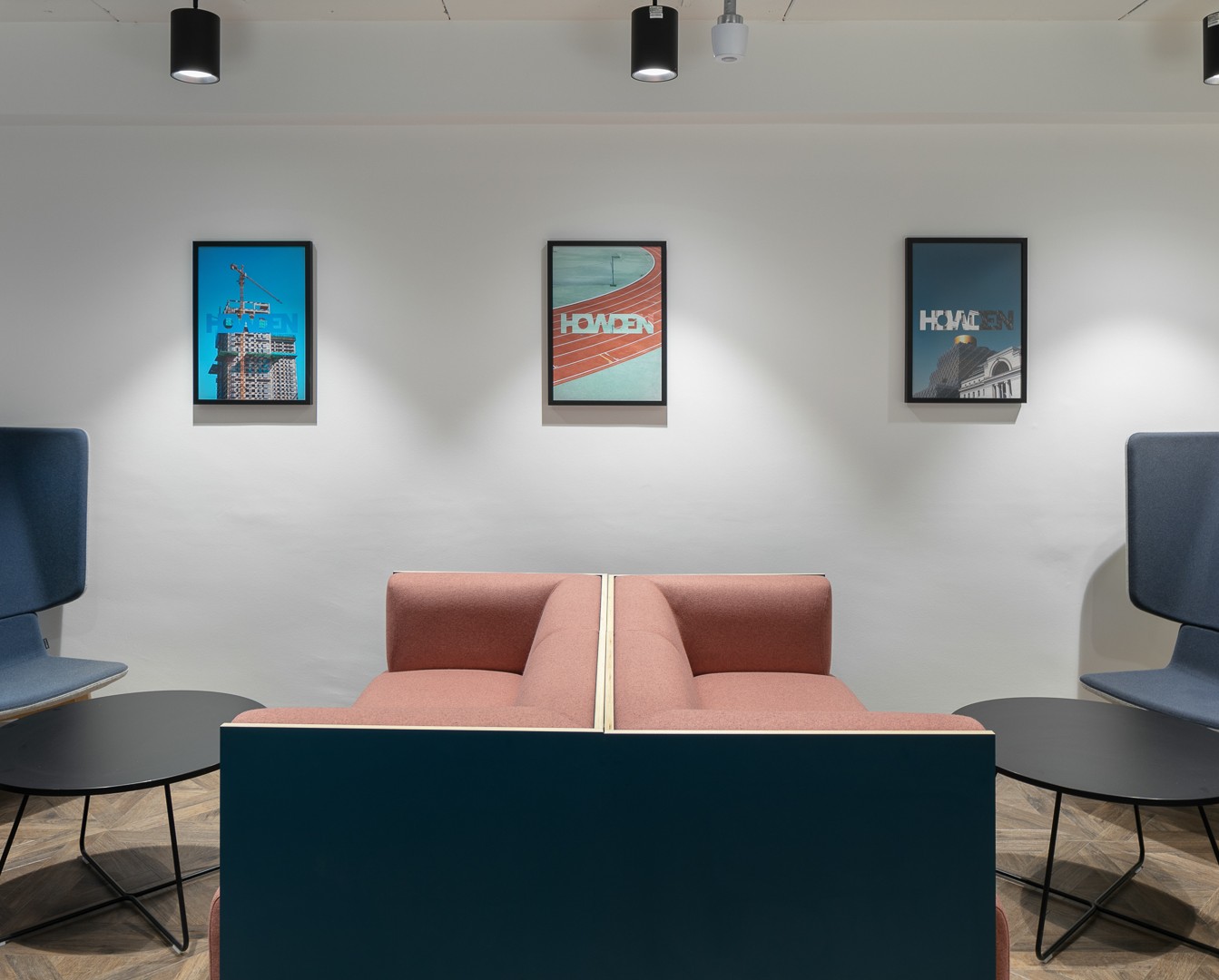
For insurers, this means re-evaluating the workplace as a tool for cohesion, belonging and experience, not simply function or footprint. Where the built environment aligns with identity and intention, it can reinforce clarity and connection. Where it does not, fragmentation tends to deepen.
Legacy cultures, reputational exposure, and operational inconsistency remain live tensions across the sector. Particularly for acquisitive firms, mismatched environments and behaviours can blur identity and stall progress. But these same forces, when approached with intent, present an opportunity for coherence. The workplace can unify a shared culture, stabilise rhythms, and signal ambition - if shaped with clarity.
One example of how these dynamics can take shape is insurance brokerage SRG. Following a period of rapid growth and acquisition, SRG chose to unify 400 colleagues onto a single floor. This consolidation addressed both fragmentation and cultural alignment, enabling clearer ways of working and deeper organisational connection.
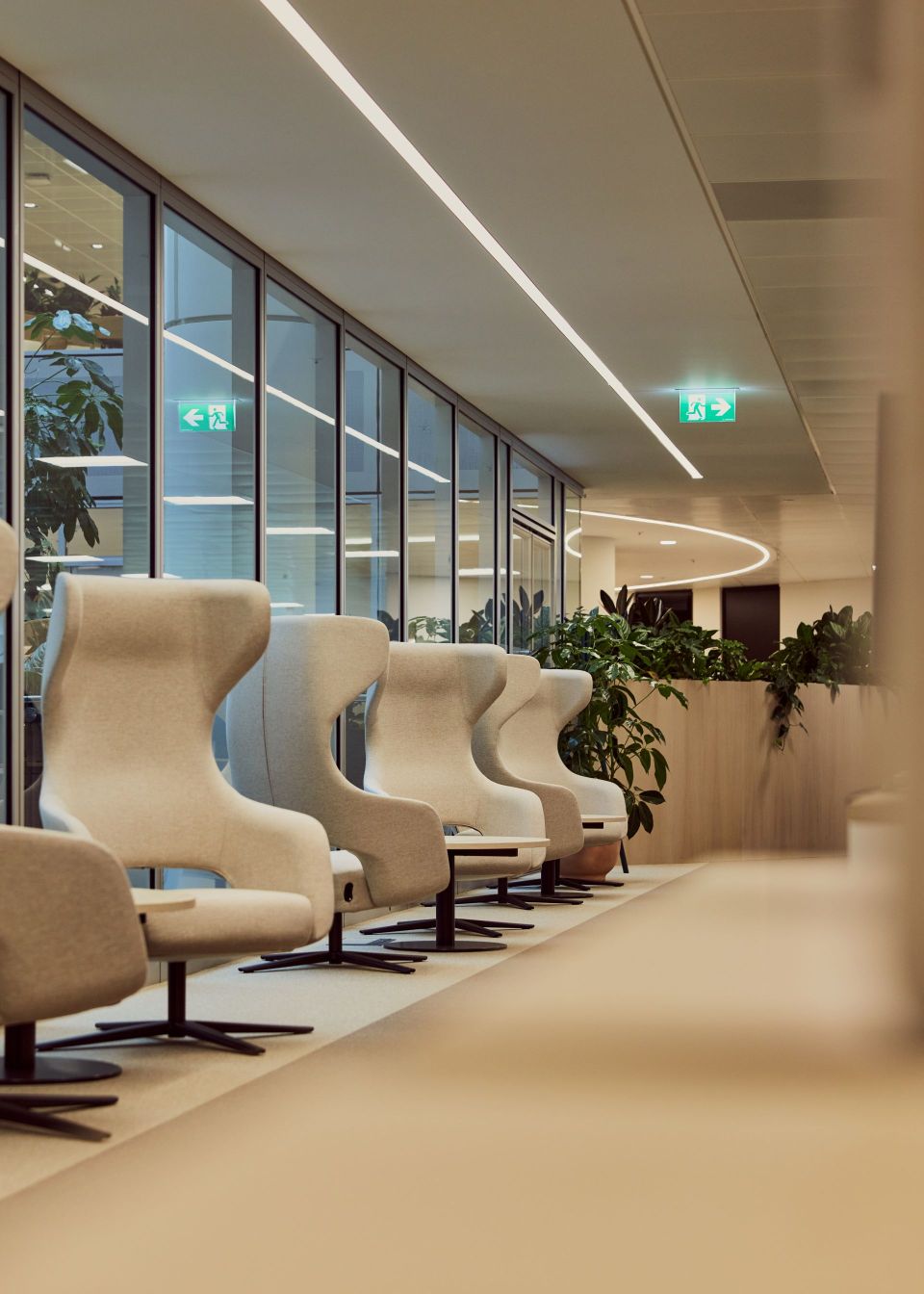
The environment includes a central heart space that encourages informal interaction and greater visibility between teams. Material reuse and integrated planting signal a commitment to both sustainability and wellbeing. Leadership explicitly framed the workplace as a "professional, representative home for the business", a strategic signal to both colleagues and the market.
SRG demonstrates how consolidation can serve as a strategic lever, culture as operational infrastructure, and space as a signalling device. It’s not a blueprint, but a live illustration of how insurance workplace forces can be practically interpreted.
As insurers navigate rising regulatory pressure and internal transformation, workplace decisions are becoming more consequential. Physical environments are acting as cultural proxies - revealing whether leadership is aligned, intentional, and credible. Misalignment leads to slower decisions, weaker collaboration, and reputational risk. Coherence, when shaped deliberately, enables clarity, stability and performance.
For many insurance organisations, 2026 is likely to be a year where workplace decisions either reinforce coherence or prolong fragmentation. Presence must be purposeful. Identity needs to be visible. Culture should feel consistent across physical and behavioural dimensions.
When organisations navigate legacy structures or post-acquisition complexity, the workplace becomes a visible expression of unity, ambition and strategic clarity. It can reduce friction across inherited systems, strengthening the rhythm of everyday operations. It is also where inclusion, wellbeing and hybrid behaviours take shape, influencing how people connect, learn and contribute to a shared culture.
In short, the workplace is where strategic intent becomes tangible.
Consolidation following M&A, hybrid workforce maturity, cultural integration, growing sustainability expectations, and the workplace’s evolving role as an identity signal are the key forces shaping decisions.
Without cultural cohesion, insurers risk inconsistent behaviours, weakened collaboration and reputational ambiguity. Integration helps re-establish clarity and build trust across previously separate entities.
Hybrid working in insurance is now less about policy and more about behaviour. Leaders are shifting focus from mandating attendance to defining why and when presence creates value.
For insurers, physical space increasingly communicates ambition, stability and coherence - not only to employees but to clients, partners and investors seeking cultural and reputational signals.
Sustainability expectations in the insurance sector are now tied to governance credibility, operational efficiency and wellbeing - making them critical factors in both workplace planning and board-level reporting.
Explore the SRG project → here.
Several forces already reshaping the industry are likely to further define how insurers operate in 2026. Post-M&A consolidation continues to expose the operational and behavioural inconsistencies that come with integrating legacy cultures. Sustainability expectations, from both regulators and stakeholders, are intensifying, making workplace efficiency and environmental credibility board-level priorities.
Hybrid presence, once governed by attendance policies, now requires behavioural clarity from leadership. Generational shifts in workforce expectations are prompting fresh scrutiny of workplace experience. And across the board, the physical environment is becoming a strategic proxy for organisational identity.
For insurers, this means re-evaluating the workplace as a tool for cohesion, belonging and experience, not simply function or footprint. Where the built environment aligns with identity and intention, it can reinforce clarity and connection. Where it does not, fragmentation tends to deepen.
Legacy cultures, reputational exposure, and operational inconsistency remain live tensions across the sector. Particularly for acquisitive firms, mismatched environments and behaviours can blur identity and stall progress. But these same forces, when approached with intent, present an opportunity for coherence. The workplace can unify a shared culture, stabilise rhythms, and signal ambition - if shaped with clarity.
One example of how these dynamics can take shape is insurance brokerage SRG. Following a period of rapid growth and acquisition, SRG chose to unify 400 colleagues onto a single floor. This consolidation addressed both fragmentation and cultural alignment, enabling clearer ways of working and deeper organisational connection.
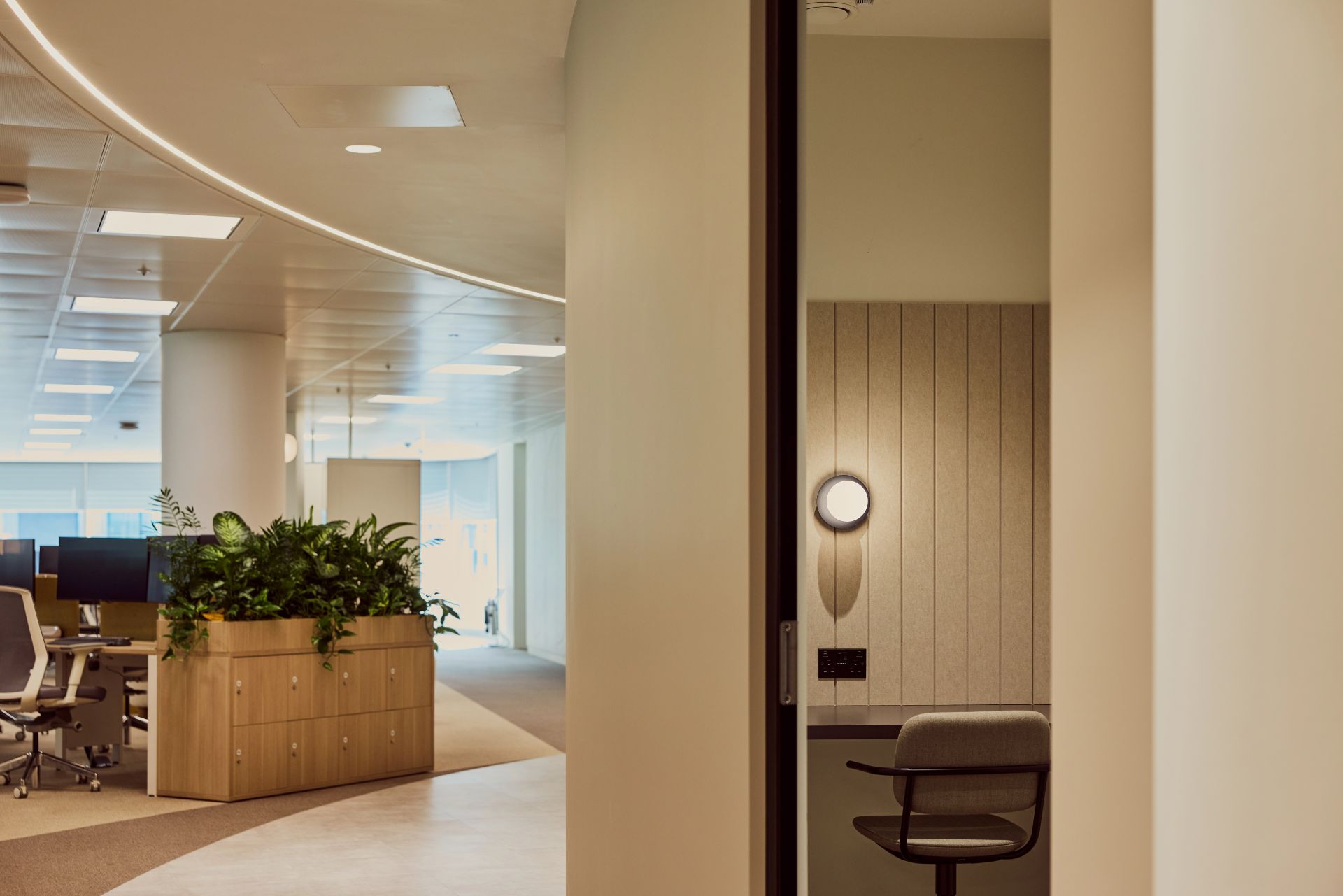
The environment includes a central heart space that encourages informal interaction and greater visibility between teams. Material reuse and integrated planting signal a commitment to both sustainability and wellbeing. Leadership explicitly framed the workplace as a "professional, representative home for the business", a strategic signal to both colleagues and the market.
SRG demonstrates how consolidation can serve as a strategic lever, culture as operational infrastructure, and space as a signalling device. It’s not a blueprint, but a live illustration of how insurance workplace forces can be practically interpreted.
As insurers navigate rising regulatory pressure and internal transformation, workplace decisions are becoming more consequential. Physical environments are acting as cultural proxies - revealing whether leadership is aligned, intentional, and credible. Misalignment leads to slower decisions, weaker collaboration, and reputational risk. Coherence, when shaped deliberately, enables clarity, stability and performance.
For many insurance organisations, 2026 is likely to be a year where workplace decisions either reinforce coherence or prolong fragmentation. Presence must be purposeful. Identity needs to be visible. Culture should feel consistent across physical and behavioural dimensions.
When organisations navigate legacy structures or post-acquisition complexity, the workplace becomes a visible expression of unity, ambition and strategic clarity. It can reduce friction across inherited systems, strengthening the rhythm of everyday operations. It is also where inclusion, wellbeing and hybrid behaviours take shape, influencing how people connect, learn and contribute to a shared culture.
In short, the workplace is where strategic intent becomes tangible.
Consolidation following M&A, hybrid workforce maturity, cultural integration, growing sustainability expectations, and the workplace’s evolving role as an identity signal are the key forces shaping decisions.
Without cultural cohesion, insurers risk inconsistent behaviours, weakened collaboration and reputational ambiguity. Integration helps re-establish clarity and build trust across previously separate entities.
Hybrid working in insurance is now less about policy and more about behaviour. Leaders are shifting focus from mandating attendance to defining why and when presence creates value.
For insurers, physical space increasingly communicates ambition, stability and coherence - not only to employees but to clients, partners and investors seeking cultural and reputational signals.
Sustainability expectations in the insurance sector are now tied to governance credibility, operational efficiency and wellbeing - making them critical factors in both workplace planning and board-level reporting.
Explore the SRG project → here.

Several forces already reshaping the industry are likely to further define how insurers operate in 2026. Post-M&A consolidation continues to expose the operational and behavioural inconsistencies that come with integrating legacy cultures. Sustainability expectations, from both regulators and stakeholders, are intensifying, making workplace efficiency and environmental credibility board-level priorities.
Hybrid presence, once governed by attendance policies, now requires behavioural clarity from leadership. Generational shifts in workforce expectations are prompting fresh scrutiny of workplace experience. And across the board, the physical environment is becoming a strategic proxy for organisational identity.
For insurers, this means re-evaluating the workplace as a tool for cohesion, belonging and experience, not simply function or footprint. Where the built environment aligns with identity and intention, it can reinforce clarity and connection. Where it does not, fragmentation tends to deepen.
Legacy cultures, reputational exposure, and operational inconsistency remain live tensions across the sector. Particularly for acquisitive firms, mismatched environments and behaviours can blur identity and stall progress. But these same forces, when approached with intent, present an opportunity for coherence. The workplace can unify a shared culture, stabilise rhythms, and signal ambition - if shaped with clarity.
One example of how these dynamics can take shape is insurance brokerage SRG. Following a period of rapid growth and acquisition, SRG chose to unify 400 colleagues onto a single floor. This consolidation addressed both fragmentation and cultural alignment, enabling clearer ways of working and deeper organisational connection.
The environment includes a central heart space that encourages informal interaction and greater visibility between teams. Material reuse and integrated planting signal a commitment to both sustainability and wellbeing. Leadership explicitly framed the workplace as a "professional, representative home for the business", a strategic signal to both colleagues and the market.
SRG demonstrates how consolidation can serve as a strategic lever, culture as operational infrastructure, and space as a signalling device. It’s not a blueprint, but a live illustration of how insurance workplace forces can be practically interpreted.
As insurers navigate rising regulatory pressure and internal transformation, workplace decisions are becoming more consequential. Physical environments are acting as cultural proxies - revealing whether leadership is aligned, intentional, and credible. Misalignment leads to slower decisions, weaker collaboration, and reputational risk. Coherence, when shaped deliberately, enables clarity, stability and performance.
For many insurance organisations, 2026 is likely to be a year where workplace decisions either reinforce coherence or prolong fragmentation. Presence must be purposeful. Identity needs to be visible. Culture should feel consistent across physical and behavioural dimensions.
When organisations navigate legacy structures or post-acquisition complexity, the workplace becomes a visible expression of unity, ambition and strategic clarity. It can reduce friction across inherited systems, strengthening the rhythm of everyday operations. It is also where inclusion, wellbeing and hybrid behaviours take shape, influencing how people connect, learn and contribute to a shared culture.
In short, the workplace is where strategic intent becomes tangible.
Consolidation following M&A, hybrid workforce maturity, cultural integration, growing sustainability expectations, and the workplace’s evolving role as an identity signal are the key forces shaping decisions.
Without cultural cohesion, insurers risk inconsistent behaviours, weakened collaboration and reputational ambiguity. Integration helps re-establish clarity and build trust across previously separate entities.
Hybrid working in insurance is now less about policy and more about behaviour. Leaders are shifting focus from mandating attendance to defining why and when presence creates value.
For insurers, physical space increasingly communicates ambition, stability and coherence - not only to employees but to clients, partners and investors seeking cultural and reputational signals.
Sustainability expectations in the insurance sector are now tied to governance credibility, operational efficiency and wellbeing - making them critical factors in both workplace planning and board-level reporting.
Explore the SRG project → here.