


Download for free now
Thank you! Your submission has been received!
Oops! Something went wrong while submitting the form.


When teams are cut off from one another, productivity drops, creativity stalls and morale suffers.
A Harvard Business Review survey found that 67% of collaboration failures stem from silos, and 97% of executives say silos have a negative impact on their business.
Silos don’t just isolate people from one another, they disconnect them from the company’s mission. Information doesn’t flow, priorities clash and problems that have been solved together remain stuck in departmental loops.
Breaking down these physical and social barriers leads to tangible business benefits, including:
But removing walls alone isn’t enough. Open-plan offices without structure can create new barriers – noise, distraction, and a lack of privacy. The goal isn’t just openness. It’s intentionality.
It’s easy to say, “We want more collaboration,” but unless leaders define what that actually looks like in practice, it risks becoming a vague ambition rather than a measurable goal. True collaboration isn’t just about being in the same room or adding more meeting spaces. It’s about shaping behaviours and building the right environment to support them.
To do that, organisations need to move beyond buzzwords and identify what collaboration really means within their organisation. As Craig Murray, our Workplace Strategy Director, puts it: “Spaces alone don’t collaborate. People do.”
Collaboration is about creating the right conditions for people to work with each other. Broadly speaking, workplaces should be designed to support both structured collaboration (like project meetings) and organic connection (like spontaneous conversations and idea-sharing).
To break down silos and improve collaboration, we need to get more specific:
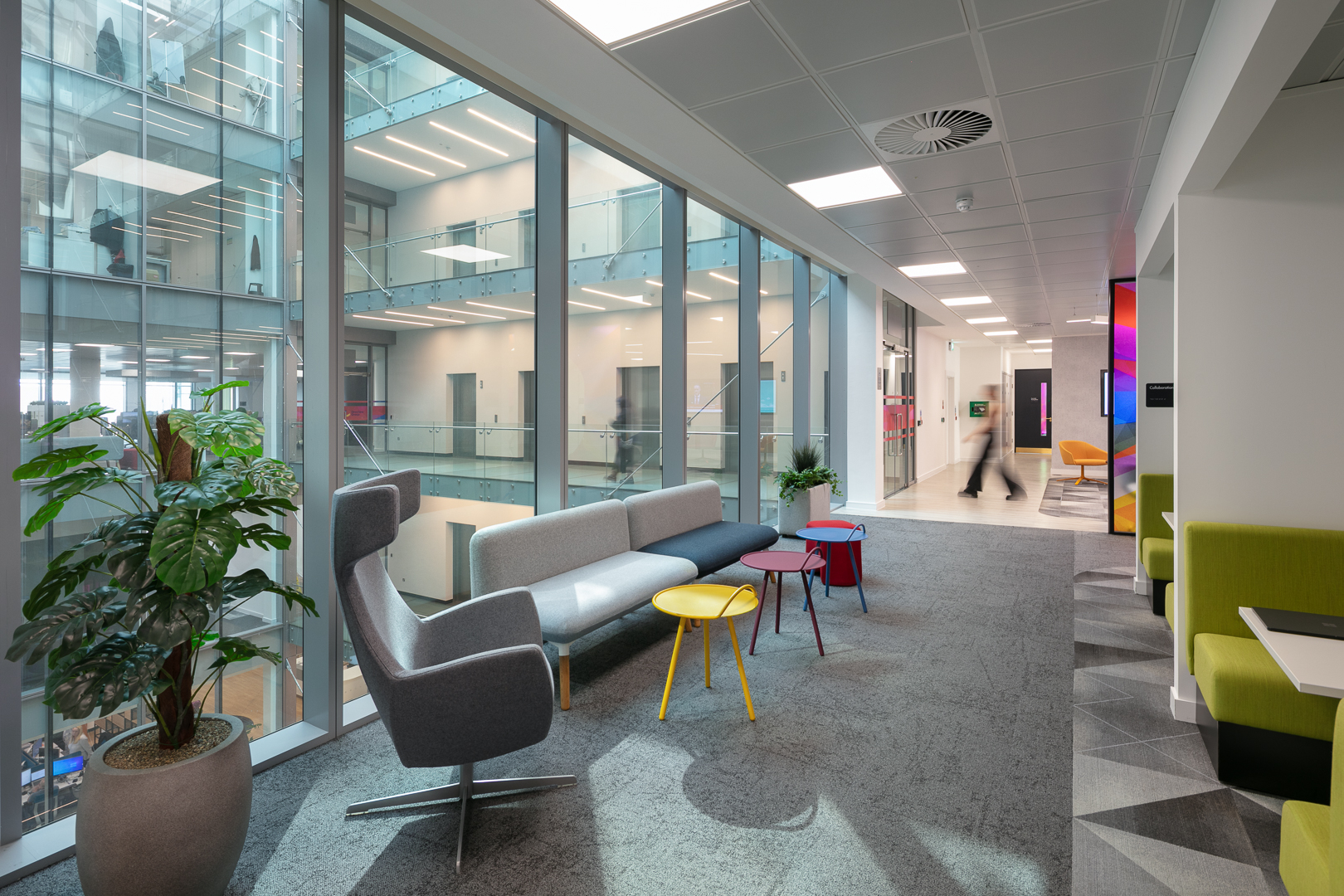
Workplaces are so much more than a container for desks. They influence how people behave, how often they interact, and how easily they work together. Offices shouldn’t just house work, they should shape it.
As workplace strategists and designers, our role is to create spaces that support how people work best so businesses see the outcomes that matter most. It’s about understanding how people move, interact, and build relationships across the business. These behaviours can’t be forced, but they can be enabled by design.
Design approaches to break down silos and encourage daily interaction might include:
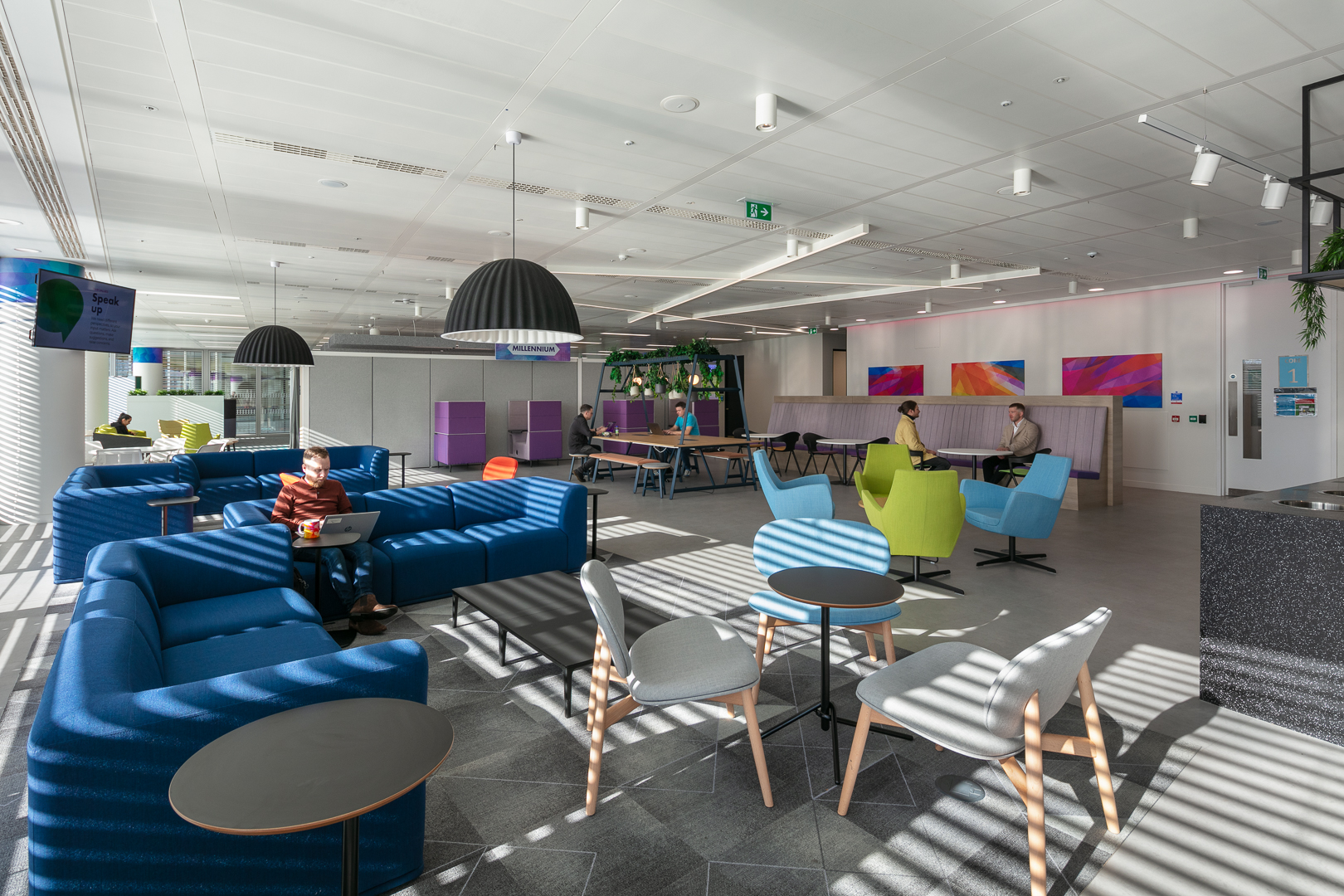
After 35 years in Bromley, DLG’s siloed and hierarchical departments were preventing them from staying competitive in an increasingly digital landscape. Their ambition was to create a modern environment that would support their digital transformation and culture shift.
Through an in-depth consultation, we analysed occupancy levels, employee needs and business goals. This led to the decision to move to a new London HQ, where DLG now occupy just a quarter of their previous footprint. The new environment is a celebration of togetherness – a fun and collaborative space where staff can make the most of in-person opportunities.
DLG have adopted a ‘managed hybrid’ work style, bringing teams in on synchronised days to focus on collaborative activities. To support this approach, we designed five ‘dynamic zones’. For example, the learning zone is assigned to training, the focus zone is for projects requiring privacy, and the social zone is the place to grab a coffee and catch up with colleagues. Each zone is equipped with the right tools for its purpose, from mobile whiteboards to sound-absorbing materials. Rather than organising the office around traditional departmental boundaries, such as marketing or IT, the new setup promotes an agile work mentality. Previously dispersed teams are now drawn together and encouraged to move around, connect with one another, and interact more freely.
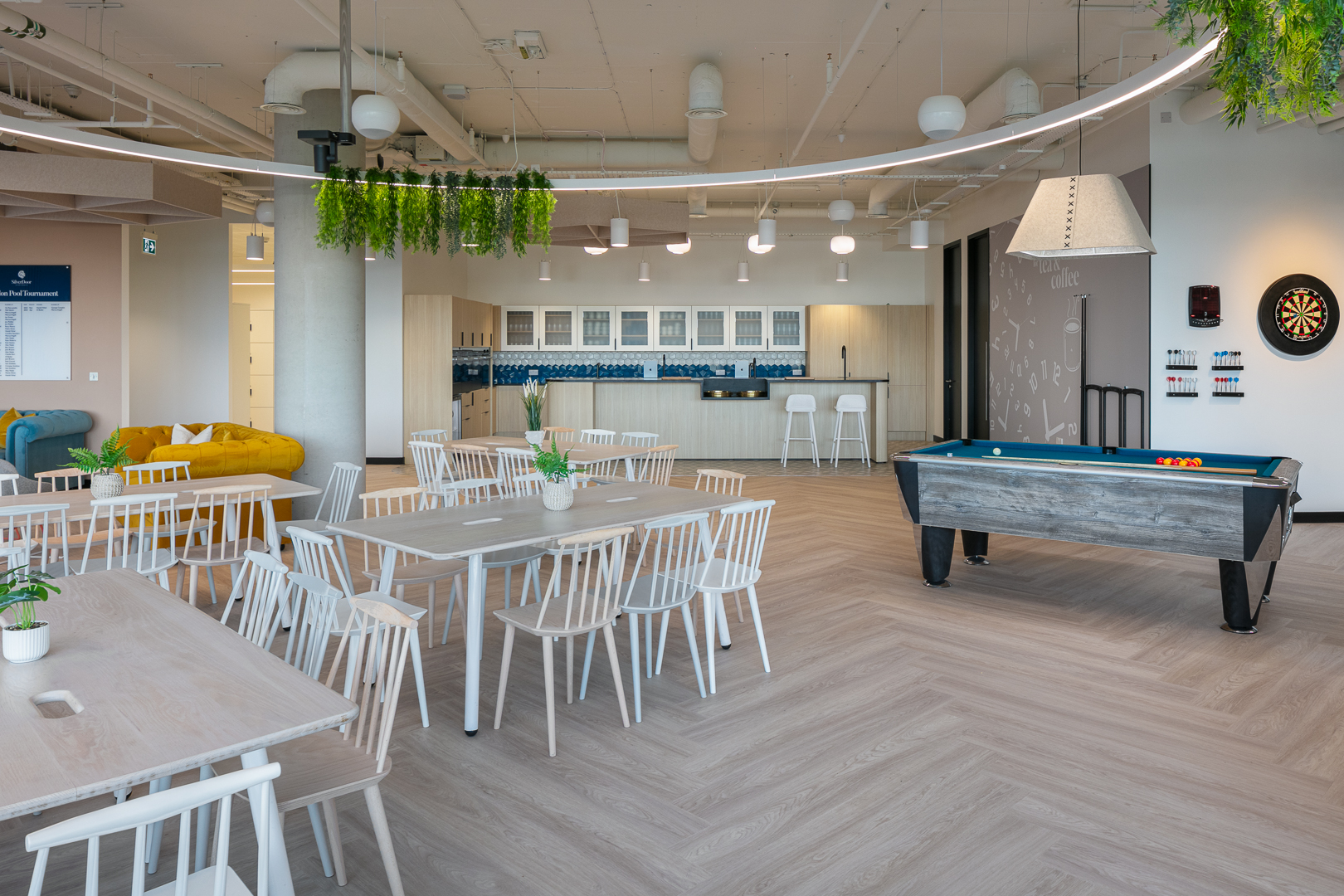
SilverDoor’s office spanned three floors, which made it challenging for teams to collaborate and connect. When their lease ended, it was the perfect opportunity to relocate from a multi-floor office to an open-plan headquarters that would strengthen connections between its employees, clients and partners.
The new layout at the award-winning Chiswick Park development in London brings everyone together on a single floor. There is a mix of settings, including flexible collaborative areas, focused individual zones and a lively social area – The Den – strategically positioned at the heart of the space to draw people through the building and encourage interaction.
Designed for both work and play, the space also includes hybrid-enabled meeting rooms with advanced technology and acoustics for seamless collaboration with clients and colleagues worldwide.
The office isn’t just a workplace, it’s a hub for creativity, connection and community. It’s designed for hosting events, welcoming clients and partners, and showcasing SilverDoor’s services.
One of the most overlooked aspects of workplace design is understanding how people actually work. Connection doesn’t happen by accident. That’s why we help leaders define the type of culture and behaviours they want to see, then translate that into a space that brings it to life.
We start every project by gathering deep insight - whether that’s through observation, employee interviews, surveys, or utilisation studies. This research uncovers how employees move and interact, where processes and interactions break down, where silos form, and what infrastructure supports or blocks connection.
If you’re responsible for team performance, workplace strategy and company culture, here are three steps to get started:
We help organisations break down silos and build high-performing, connected teams through workplace transformation. Get in touch to explore how we can create extraordinary outcomes for your company.
When teams are cut off from one another, productivity drops, creativity stalls and morale suffers.
A Harvard Business Review survey found that 67% of collaboration failures stem from silos, and 97% of executives say silos have a negative impact on their business.
Silos don’t just isolate people from one another, they disconnect them from the company’s mission. Information doesn’t flow, priorities clash and problems that have been solved together remain stuck in departmental loops.
Breaking down these physical and social barriers leads to tangible business benefits, including:
But removing walls alone isn’t enough. Open-plan offices without structure can create new barriers – noise, distraction, and a lack of privacy. The goal isn’t just openness. It’s intentionality.
It’s easy to say, “We want more collaboration,” but unless leaders define what that actually looks like in practice, it risks becoming a vague ambition rather than a measurable goal. True collaboration isn’t just about being in the same room or adding more meeting spaces. It’s about shaping behaviours and building the right environment to support them.
To do that, organisations need to move beyond buzzwords and identify what collaboration really means within their organisation. As Craig Murray, our Workplace Strategy Director, puts it: “Spaces alone don’t collaborate. People do.”
Collaboration is about creating the right conditions for people to work with each other. Broadly speaking, workplaces should be designed to support both structured collaboration (like project meetings) and organic connection (like spontaneous conversations and idea-sharing).
To break down silos and improve collaboration, we need to get more specific:
Workplaces are so much more than a container for desks. They influence how people behave, how often they interact, and how easily they work together. Offices shouldn’t just house work, they should shape it.
As workplace strategists and designers, our role is to create spaces that support how people work best so businesses see the outcomes that matter most. It’s about understanding how people move, interact, and build relationships across the business. These behaviours can’t be forced, but they can be enabled by design.
Design approaches to break down silos and encourage daily interaction might include:
After 35 years in Bromley, DLG’s siloed and hierarchical departments were preventing them from staying competitive in an increasingly digital landscape. Their ambition was to create a modern environment that would support their digital transformation and culture shift.
Through an in-depth consultation, we analysed occupancy levels, employee needs and business goals. This led to the decision to move to a new London HQ, where DLG now occupy just a quarter of their previous footprint. The new environment is a celebration of togetherness – a fun and collaborative space where staff can make the most of in-person opportunities.
DLG have adopted a ‘managed hybrid’ work style, bringing teams in on synchronised days to focus on collaborative activities. To support this approach, we designed five ‘dynamic zones’. For example, the learning zone is assigned to training, the focus zone is for projects requiring privacy, and the social zone is the place to grab a coffee and catch up with colleagues. Each zone is equipped with the right tools for its purpose, from mobile whiteboards to sound-absorbing materials. Rather than organising the office around traditional departmental boundaries, such as marketing or IT, the new setup promotes an agile work mentality. Previously dispersed teams are now drawn together and encouraged to move around, connect with one another, and interact more freely.
SilverDoor’s office spanned three floors, which made it challenging for teams to collaborate and connect. When their lease ended, it was the perfect opportunity to relocate from a multi-floor office to an open-plan headquarters that would strengthen connections between its employees, clients and partners.
The new layout at the award-winning Chiswick Park development in London brings everyone together on a single floor. There is a mix of settings, including flexible collaborative areas, focused individual zones and a lively social area – The Den – strategically positioned at the heart of the space to draw people through the building and encourage interaction.
Designed for both work and play, the space also includes hybrid-enabled meeting rooms with advanced technology and acoustics for seamless collaboration with clients and colleagues worldwide.
The office isn’t just a workplace, it’s a hub for creativity, connection and community. It’s designed for hosting events, welcoming clients and partners, and showcasing SilverDoor’s services.
One of the most overlooked aspects of workplace design is understanding how people actually work. Connection doesn’t happen by accident. That’s why we help leaders define the type of culture and behaviours they want to see, then translate that into a space that brings it to life.
We start every project by gathering deep insight - whether that’s through observation, employee interviews, surveys, or utilisation studies. This research uncovers how employees move and interact, where processes and interactions break down, where silos form, and what infrastructure supports or blocks connection.
If you’re responsible for team performance, workplace strategy and company culture, here are three steps to get started:
We help organisations break down silos and build high-performing, connected teams through workplace transformation. Get in touch to explore how we can create extraordinary outcomes for your company.
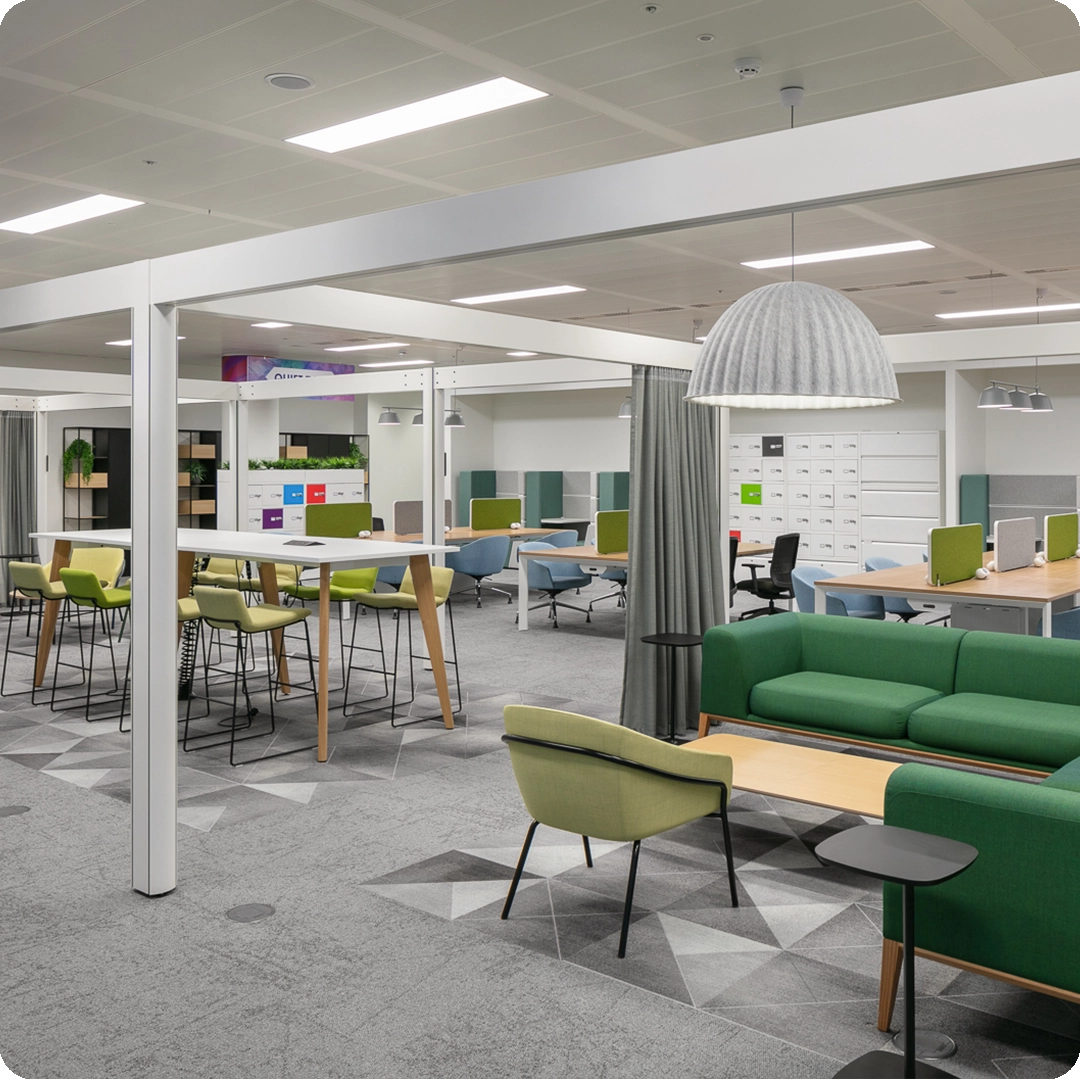
When teams are cut off from one another, productivity drops, creativity stalls and morale suffers.
A Harvard Business Review survey found that 67% of collaboration failures stem from silos, and 97% of executives say silos have a negative impact on their business.
Silos don’t just isolate people from one another, they disconnect them from the company’s mission. Information doesn’t flow, priorities clash and problems that have been solved together remain stuck in departmental loops.
Breaking down these physical and social barriers leads to tangible business benefits, including:
But removing walls alone isn’t enough. Open-plan offices without structure can create new barriers – noise, distraction, and a lack of privacy. The goal isn’t just openness. It’s intentionality.
It’s easy to say, “We want more collaboration,” but unless leaders define what that actually looks like in practice, it risks becoming a vague ambition rather than a measurable goal. True collaboration isn’t just about being in the same room or adding more meeting spaces. It’s about shaping behaviours and building the right environment to support them.
To do that, organisations need to move beyond buzzwords and identify what collaboration really means within their organisation. As Craig Murray, our Workplace Strategy Director, puts it: “Spaces alone don’t collaborate. People do.”
Collaboration is about creating the right conditions for people to work with each other. Broadly speaking, workplaces should be designed to support both structured collaboration (like project meetings) and organic connection (like spontaneous conversations and idea-sharing).
To break down silos and improve collaboration, we need to get more specific:
Workplaces are so much more than a container for desks. They influence how people behave, how often they interact, and how easily they work together. Offices shouldn’t just house work, they should shape it.
As workplace strategists and designers, our role is to create spaces that support how people work best so businesses see the outcomes that matter most. It’s about understanding how people move, interact, and build relationships across the business. These behaviours can’t be forced, but they can be enabled by design.
Design approaches to break down silos and encourage daily interaction might include:
After 35 years in Bromley, DLG’s siloed and hierarchical departments were preventing them from staying competitive in an increasingly digital landscape. Their ambition was to create a modern environment that would support their digital transformation and culture shift.
Through an in-depth consultation, we analysed occupancy levels, employee needs and business goals. This led to the decision to move to a new London HQ, where DLG now occupy just a quarter of their previous footprint. The new environment is a celebration of togetherness – a fun and collaborative space where staff can make the most of in-person opportunities.
DLG have adopted a ‘managed hybrid’ work style, bringing teams in on synchronised days to focus on collaborative activities. To support this approach, we designed five ‘dynamic zones’. For example, the learning zone is assigned to training, the focus zone is for projects requiring privacy, and the social zone is the place to grab a coffee and catch up with colleagues. Each zone is equipped with the right tools for its purpose, from mobile whiteboards to sound-absorbing materials. Rather than organising the office around traditional departmental boundaries, such as marketing or IT, the new setup promotes an agile work mentality. Previously dispersed teams are now drawn together and encouraged to move around, connect with one another, and interact more freely.
SilverDoor’s office spanned three floors, which made it challenging for teams to collaborate and connect. When their lease ended, it was the perfect opportunity to relocate from a multi-floor office to an open-plan headquarters that would strengthen connections between its employees, clients and partners.
The new layout at the award-winning Chiswick Park development in London brings everyone together on a single floor. There is a mix of settings, including flexible collaborative areas, focused individual zones and a lively social area – The Den – strategically positioned at the heart of the space to draw people through the building and encourage interaction.
Designed for both work and play, the space also includes hybrid-enabled meeting rooms with advanced technology and acoustics for seamless collaboration with clients and colleagues worldwide.
The office isn’t just a workplace, it’s a hub for creativity, connection and community. It’s designed for hosting events, welcoming clients and partners, and showcasing SilverDoor’s services.
One of the most overlooked aspects of workplace design is understanding how people actually work. Connection doesn’t happen by accident. That’s why we help leaders define the type of culture and behaviours they want to see, then translate that into a space that brings it to life.
We start every project by gathering deep insight - whether that’s through observation, employee interviews, surveys, or utilisation studies. This research uncovers how employees move and interact, where processes and interactions break down, where silos form, and what infrastructure supports or blocks connection.
If you’re responsible for team performance, workplace strategy and company culture, here are three steps to get started:
We help organisations break down silos and build high-performing, connected teams through workplace transformation. Get in touch to explore how we can create extraordinary outcomes for your company.