


Download for free now
Thank you! Your submission has been received!
Oops! Something went wrong while submitting the form.


For many organisations, the conversation around sustainability has shifted from ambition to exposure. Workplace environments that once carried symbolic weight now carry evidential weight, subject to new metrics, mandated disclosures, and board-level questions. What does your office show, and how does it perform?
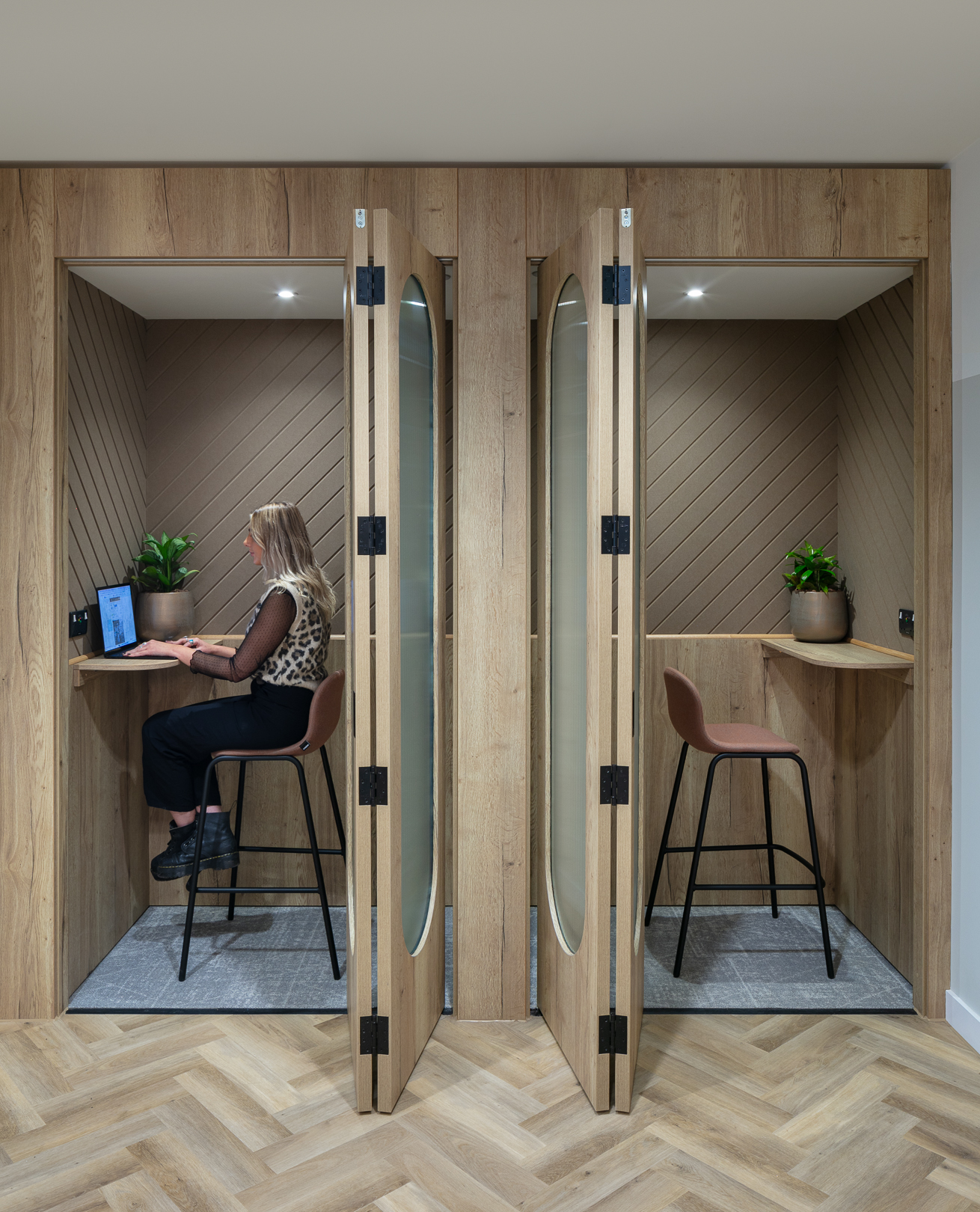
Yet the connection between workplace design and business performance is neither guaranteed nor linear. Investments made under the banner of sustainability can underperform if they fail to account for how people actually use space. ESG-aligned materials may meet environmental criteria while undermining acoustic quality or thermal comfort. Biophilic features may photograph well while adding little to daily experience. The presence of “green” design elements alone is not what matters. It is how they interact, integrate and are experienced - and whether those experiences support health, concentration, collaboration and trust.
This nuance is often missing from sustainability narratives. Too often, well-intentioned design is presented as synonymous with positive impact. In reality, the effect of sustainable workplace design depends on a set of interdependencies, how physical systems (air, light, energy) influence cognitive load, how materials affect mood or movement, and how space enables different types of work without hierarchy or exclusion. A workplace might reuse materials successfully but amplify glare on screens, or install low-energy lighting that leaves key areas dim and disorienting.
Evidence is accumulating, but it still requires interpretation. The Harvard T.H. Chan School of Public Health observed a 26% increase in cognitive scores for employees working in green-certified buildings. The World Green Building Council has linked environmental performance to reduced absenteeism and greater employee satisfaction. Yet these are average effects, not universal ones. The presence of a WELL or BREEAM certification does not automatically produce these outcomes. What matters is translation, how intent becomes configuration, and how configuration becomes experience.
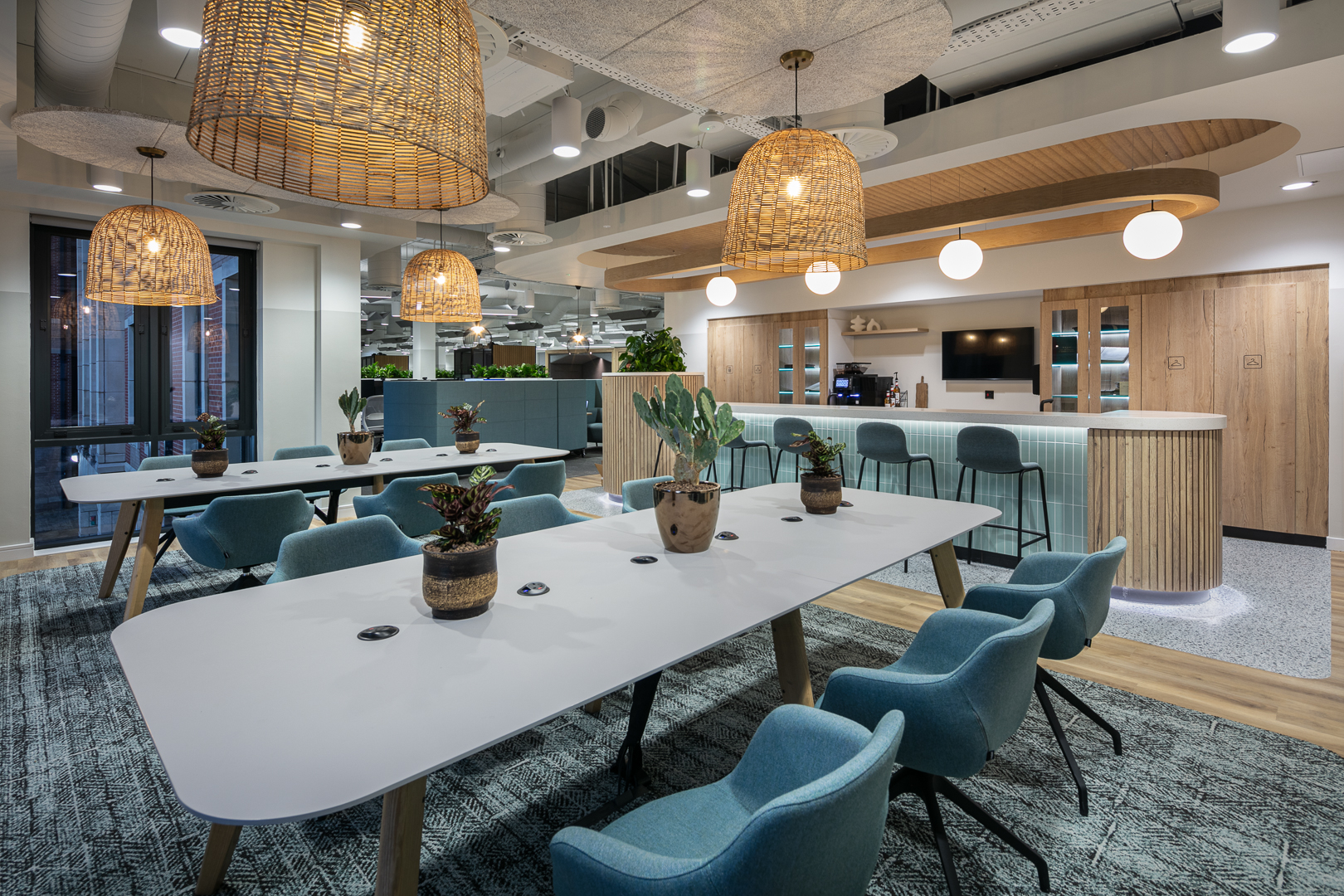
This is where accountability enters. With the introduction of frameworks such as the International Sustainability Standards Board’s IFRS S1 and S2, and the European Corporate Sustainability Reporting Directive (CSRD), environmental and social impact data is no longer optional, and physical environments are no longer peripheral. Air quality, energy intensity, and material reuse are now disclosure items. The workplace becomes visible in a way it hasn’t been before: as a contributor to scope 1 and 2 emissions, as a marker of progress or delay, and as a potential misalignment between narrative and reality.

Leadership teams are increasingly aware that these environments are not just places of work; they are testable claims. Buildings that were once judged by aesthetic and cost are now judged by performance and integrity. And with investors, regulators and employees applying their own interpretations, ambiguity has real consequences.
Consider the case of Oliver Wyman. When redesigning their London headquarters, the firm chose to retain and reuse over a third of its existing furniture, and recycled more than 70% of removed materials, not to achieve a sustainability credential, but to minimise environmental load while reconfiguring for hybrid working. The decision was not promotional. It was architectural, operational, and cultural, acknowledging that the performance of the workplace is no longer limited to how it looks or functions, but how it accounts for its impact over time.
What’s emerging is a new accountability curve, one in which physical space must now hold its own against digital metrics, audit trails and investor-grade ESG reporting. This creates a dual imperative. The workplace must support how people feel and perform today. And it must withstand how external parties evaluate corporate responsibility tomorrow.
This tension - between intention and scrutiny, performance and perception- is where sustainable workplace design now sits. Done well, it connects wellbeing and resilience with operational clarity. Done poorly, it risks signalling values that internal behaviours or environmental metrics cannot support.
Sustainable workplace design, then, is not a proof point. It is a testing ground. Not a badge, but a visible pattern of choices. And like all patterns, its meaning comes from repetition, integrity, and the willingness to see what it reveals, especially when what it reveals is uncomfortable.
For many organisations, the conversation around sustainability has shifted from ambition to exposure. Workplace environments that once carried symbolic weight now carry evidential weight, subject to new metrics, mandated disclosures, and board-level questions. What does your office show, and how does it perform?
Yet the connection between workplace design and business performance is neither guaranteed nor linear. Investments made under the banner of sustainability can underperform if they fail to account for how people actually use space. ESG-aligned materials may meet environmental criteria while undermining acoustic quality or thermal comfort. Biophilic features may photograph well while adding little to daily experience. The presence of “green” design elements alone is not what matters. It is how they interact, integrate and are experienced - and whether those experiences support health, concentration, collaboration and trust.
This nuance is often missing from sustainability narratives. Too often, well-intentioned design is presented as synonymous with positive impact. In reality, the effect of sustainable workplace design depends on a set of interdependencies, how physical systems (air, light, energy) influence cognitive load, how materials affect mood or movement, and how space enables different types of work without hierarchy or exclusion. A workplace might reuse materials successfully but amplify glare on screens, or install low-energy lighting that leaves key areas dim and disorienting.
Evidence is accumulating, but it still requires interpretation. The Harvard T.H. Chan School of Public Health observed a 26% increase in cognitive scores for employees working in green-certified buildings. The World Green Building Council has linked environmental performance to reduced absenteeism and greater employee satisfaction. Yet these are average effects, not universal ones. The presence of a WELL or BREEAM certification does not automatically produce these outcomes. What matters is translation, how intent becomes configuration, and how configuration becomes experience.
This is where accountability enters. With the introduction of frameworks such as the International Sustainability Standards Board’s IFRS S1 and S2, and the European Corporate Sustainability Reporting Directive (CSRD), environmental and social impact data is no longer optional, and physical environments are no longer peripheral. Air quality, energy intensity, and material reuse are now disclosure items. The workplace becomes visible in a way it hasn’t been before: as a contributor to scope 1 and 2 emissions, as a marker of progress or delay, and as a potential misalignment between narrative and reality.
Leadership teams are increasingly aware that these environments are not just places of work; they are testable claims. Buildings that were once judged by aesthetic and cost are now judged by performance and integrity. And with investors, regulators and employees applying their own interpretations, ambiguity has real consequences.
Consider the case of Oliver Wyman. When redesigning their London headquarters, the firm chose to retain and reuse over a third of its existing furniture, and recycled more than 70% of removed materials, not to achieve a sustainability credential, but to minimise environmental load while reconfiguring for hybrid working. The decision was not promotional. It was architectural, operational, and cultural, acknowledging that the performance of the workplace is no longer limited to how it looks or functions, but how it accounts for its impact over time.
What’s emerging is a new accountability curve, one in which physical space must now hold its own against digital metrics, audit trails and investor-grade ESG reporting. This creates a dual imperative. The workplace must support how people feel and perform today. And it must withstand how external parties evaluate corporate responsibility tomorrow.
This tension - between intention and scrutiny, performance and perception- is where sustainable workplace design now sits. Done well, it connects wellbeing and resilience with operational clarity. Done poorly, it risks signalling values that internal behaviours or environmental metrics cannot support.
Sustainable workplace design, then, is not a proof point. It is a testing ground. Not a badge, but a visible pattern of choices. And like all patterns, its meaning comes from repetition, integrity, and the willingness to see what it reveals, especially when what it reveals is uncomfortable.
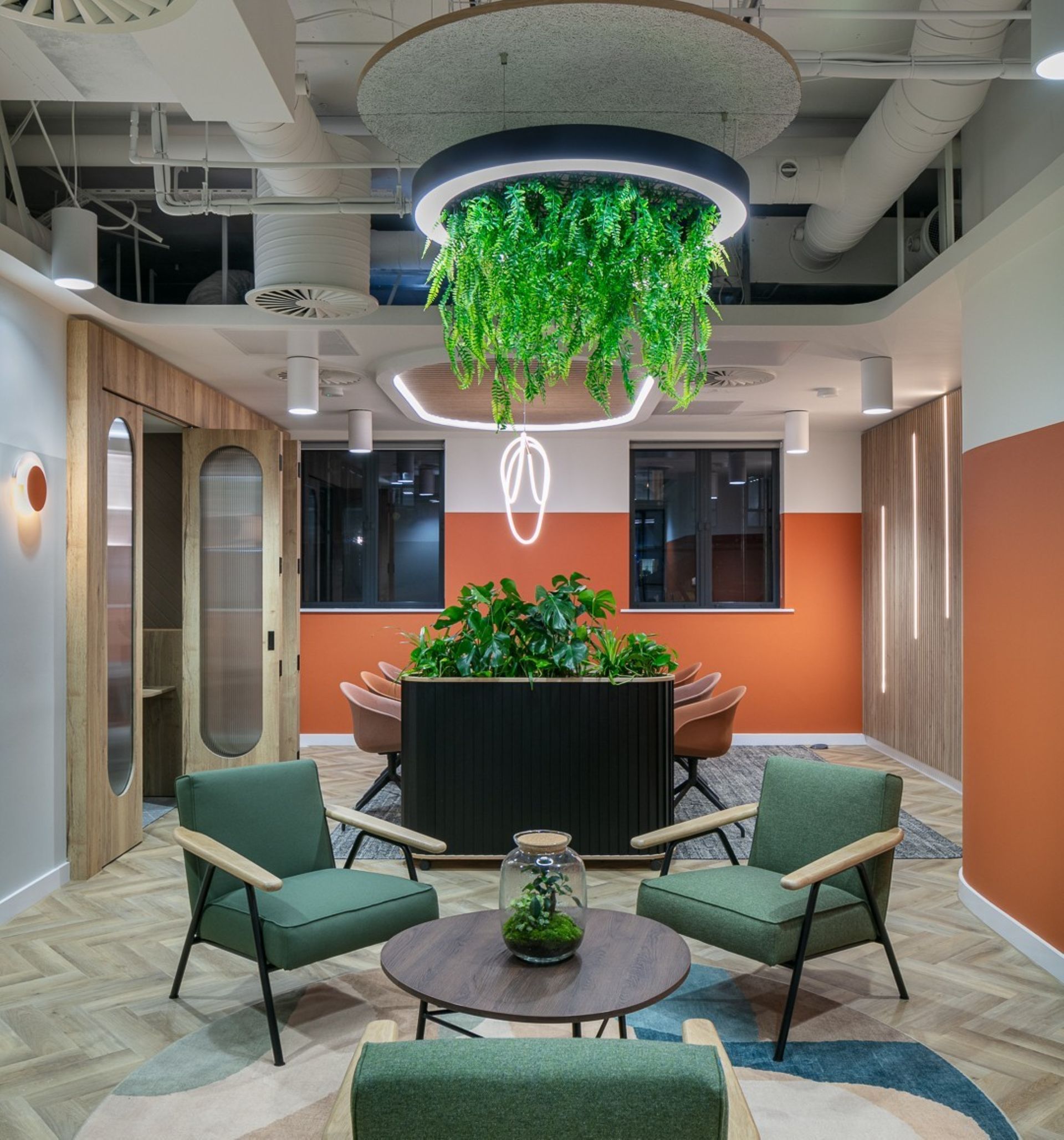
For many organisations, the conversation around sustainability has shifted from ambition to exposure. Workplace environments that once carried symbolic weight now carry evidential weight, subject to new metrics, mandated disclosures, and board-level questions. What does your office show, and how does it perform?
Yet the connection between workplace design and business performance is neither guaranteed nor linear. Investments made under the banner of sustainability can underperform if they fail to account for how people actually use space. ESG-aligned materials may meet environmental criteria while undermining acoustic quality or thermal comfort. Biophilic features may photograph well while adding little to daily experience. The presence of “green” design elements alone is not what matters. It is how they interact, integrate and are experienced - and whether those experiences support health, concentration, collaboration and trust.
This nuance is often missing from sustainability narratives. Too often, well-intentioned design is presented as synonymous with positive impact. In reality, the effect of sustainable workplace design depends on a set of interdependencies, how physical systems (air, light, energy) influence cognitive load, how materials affect mood or movement, and how space enables different types of work without hierarchy or exclusion. A workplace might reuse materials successfully but amplify glare on screens, or install low-energy lighting that leaves key areas dim and disorienting.
Evidence is accumulating, but it still requires interpretation. The Harvard T.H. Chan School of Public Health observed a 26% increase in cognitive scores for employees working in green-certified buildings. The World Green Building Council has linked environmental performance to reduced absenteeism and greater employee satisfaction. Yet these are average effects, not universal ones. The presence of a WELL or BREEAM certification does not automatically produce these outcomes. What matters is translation, how intent becomes configuration, and how configuration becomes experience.
This is where accountability enters. With the introduction of frameworks such as the International Sustainability Standards Board’s IFRS S1 and S2, and the European Corporate Sustainability Reporting Directive (CSRD), environmental and social impact data is no longer optional, and physical environments are no longer peripheral. Air quality, energy intensity, and material reuse are now disclosure items. The workplace becomes visible in a way it hasn’t been before: as a contributor to scope 1 and 2 emissions, as a marker of progress or delay, and as a potential misalignment between narrative and reality.
Leadership teams are increasingly aware that these environments are not just places of work; they are testable claims. Buildings that were once judged by aesthetic and cost are now judged by performance and integrity. And with investors, regulators and employees applying their own interpretations, ambiguity has real consequences.
Consider the case of Oliver Wyman. When redesigning their London headquarters, the firm chose to retain and reuse over a third of its existing furniture, and recycled more than 70% of removed materials, not to achieve a sustainability credential, but to minimise environmental load while reconfiguring for hybrid working. The decision was not promotional. It was architectural, operational, and cultural, acknowledging that the performance of the workplace is no longer limited to how it looks or functions, but how it accounts for its impact over time.
What’s emerging is a new accountability curve, one in which physical space must now hold its own against digital metrics, audit trails and investor-grade ESG reporting. This creates a dual imperative. The workplace must support how people feel and perform today. And it must withstand how external parties evaluate corporate responsibility tomorrow.
This tension - between intention and scrutiny, performance and perception- is where sustainable workplace design now sits. Done well, it connects wellbeing and resilience with operational clarity. Done poorly, it risks signalling values that internal behaviours or environmental metrics cannot support.
Sustainable workplace design, then, is not a proof point. It is a testing ground. Not a badge, but a visible pattern of choices. And like all patterns, its meaning comes from repetition, integrity, and the willingness to see what it reveals, especially when what it reveals is uncomfortable.


.png)

