


Download for free now
Thank you! Your submission has been received!
Oops! Something went wrong while submitting the form.


The modern office is no longer a static backdrop to work. It is a living environment that shapes how people connect, perform and feel pride in their organisation. Inspiration now comes from hospitality, where spaces are curated around anticipation, ease and emotion. Offices that borrow these principles become settings that encourage focus, collaboration and renewal.
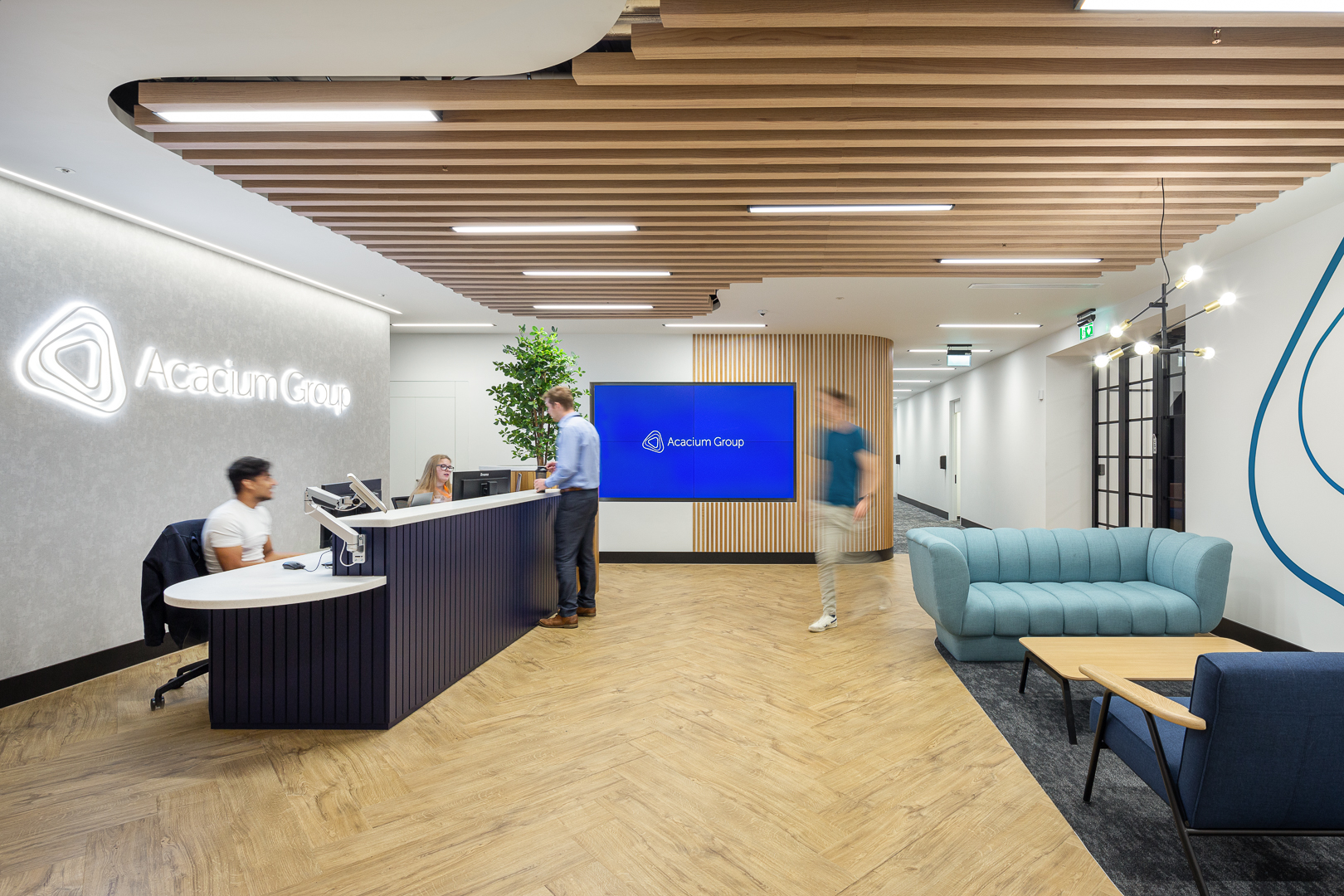
Hospitality-led design balances comfort with efficiency. It considers how people arrive, how they navigate a space, and how every detail - from lighting to acoustics - signals care and intention. A good workplace, like a good hotel, feels intuitive: it meets needs before they are expressed and supports both energy and calm.
Independent studies support this shift. The Leesman Index (2023) found that employees report higher satisfaction where workplaces deliver comfort, personal control and a strong sense of welcome. The British Council for Offices (2023) observed that offices designed to encourage participation, not just attendance, foster greater engagement and community .
Core hospitality principles now appear in many high-performing workplaces:
1. Arrival experience. A considered entrance helps people feel expected and at ease.
2. Service-led amenities. Café zones, libraries and well-being areas provide meaningful social and restorative spaces.
3. Zoned environments. Quiet areas, lounges and collaborative settings offer choice and autonomy.
4. Attention to detail. Light quality, texture and acoustics sustain focus and comfort throughout the day.
These are not decorative touches. They define how a space feels and how people behave within it.
.jpg)
Designing with a hospitality mindset is not about luxury. It is about empathy. When a workplace feels cared for, people respond in kind. They take greater ownership, build stronger connections and experience a clearer sense of belonging.
Research by Future Forum Pulse (2023) shows that employees who feel emotionally connected to their workplace are twice as likely to stay and significantly more likely to describe their organisation as high-performing . In this context, workplace experience becomes both a human and a business advantage.
A hospitality-informed environment also strengthens identity. Every surface, sound and scent communicates values, whether deliberately or by default. When those cues align, people sense coherence and purpose - a subtle yet powerful reinforcement of culture.
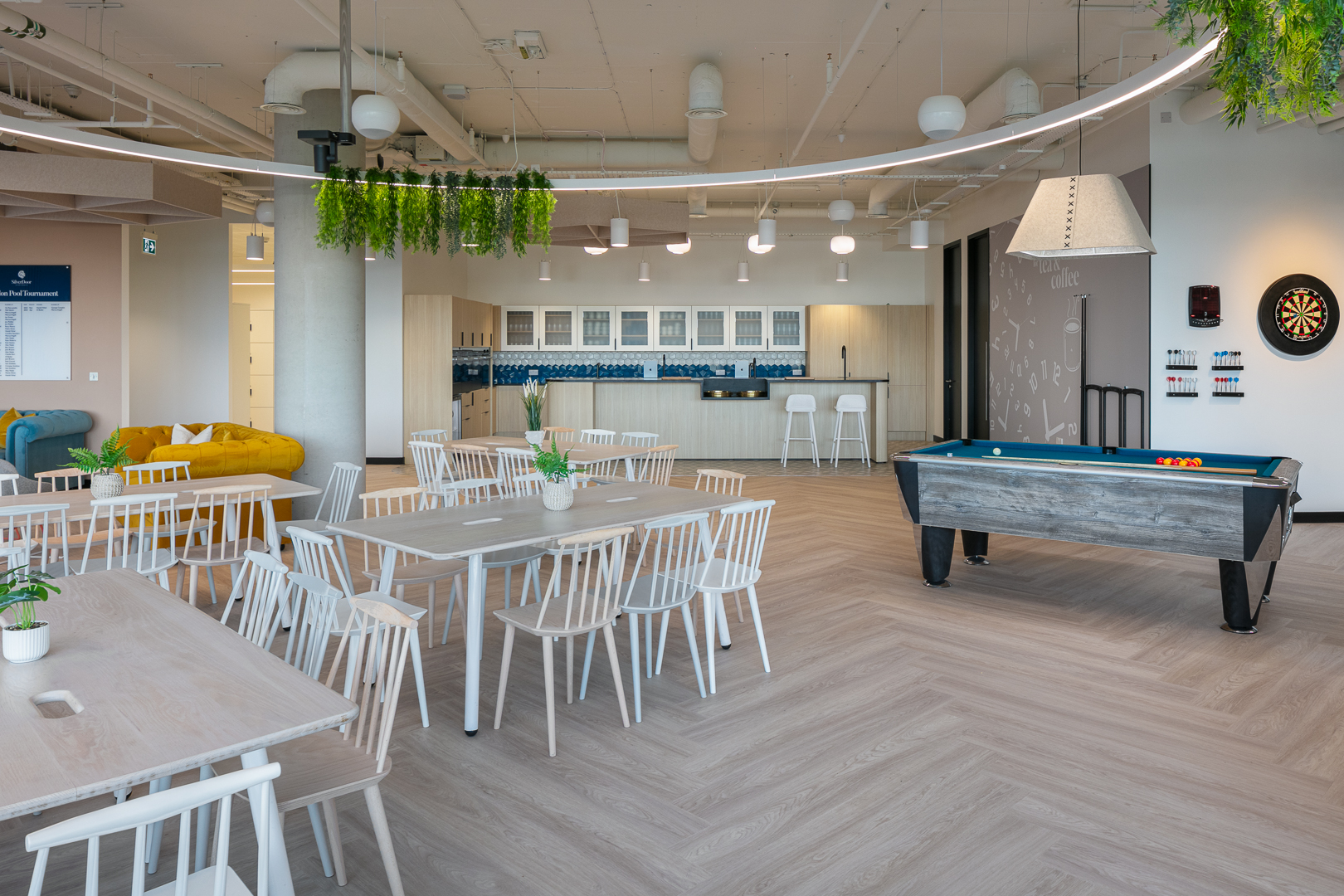
SilverDoor, the corporate accommodation provider, sought to create a workspace that reflected its service culture. Its new 15,000 sq ft headquarters in Chiswick Park adopts a hospitality-led approach: a concierge-style entrance, café-social hub and flexible zones for different workstyles. Natural light, acoustic balance and material warmth contribute to an atmosphere that feels both professional and relaxed.
The result is a workplace that supports connection, creativity and pride. As founder Marcus Angell said:
“We wanted to create the best possible space for our people, and we’ve achieved this together.”
Choice now defines the workplace. In a world of flexible schedules, the office must earn each visit through experience quality. Hospitality-led design helps achieve that by combining functionality with emotional intelligence.
To create workplaces that people choose, focus on:
• Ease of arrival. Begin every day with clarity and welcome.
• Balanced settings. Provide spaces for concentration, collaboration and pause.
• Material comfort. Use light, acoustics and texture to support well-being.
• Consistent cues. Align physical details with organisational values.
These principles turn space into an active part of culture, a place that feels cared for, and therefore encourages people to care in return.
Mapping the daily journey is the simplest starting point. Observe how people move, meet and rest. Identify moments that could feel more personal or intuitive. Small, evidence-based changes, better transitions, clearer zoning, a more welcoming entrance can have a disproportionate impact on satisfaction and engagement.
The modern office is no longer a static backdrop to work. It is a living environment that shapes how people connect, perform and feel pride in their organisation. Inspiration now comes from hospitality, where spaces are curated around anticipation, ease and emotion. Offices that borrow these principles become settings that encourage focus, collaboration and renewal.
Hospitality-led design balances comfort with efficiency. It considers how people arrive, how they navigate a space, and how every detail - from lighting to acoustics - signals care and intention. A good workplace, like a good hotel, feels intuitive: it meets needs before they are expressed and supports both energy and calm.
Independent studies support this shift. The Leesman Index (2023) found that employees report higher satisfaction where workplaces deliver comfort, personal control and a strong sense of welcome. The British Council for Offices (2023) observed that offices designed to encourage participation, not just attendance, foster greater engagement and community .
Core hospitality principles now appear in many high-performing workplaces:
1. Arrival experience. A considered entrance helps people feel expected and at ease.
2. Service-led amenities. Café zones, libraries and well-being areas provide meaningful social and restorative spaces.
3. Zoned environments. Quiet areas, lounges and collaborative settings offer choice and autonomy.
4. Attention to detail. Light quality, texture and acoustics sustain focus and comfort throughout the day.
These are not decorative touches. They define how a space feels and how people behave within it.
Designing with a hospitality mindset is not about luxury. It is about empathy. When a workplace feels cared for, people respond in kind. They take greater ownership, build stronger connections and experience a clearer sense of belonging.
Research by Future Forum Pulse (2023) shows that employees who feel emotionally connected to their workplace are twice as likely to stay and significantly more likely to describe their organisation as high-performing . In this context, workplace experience becomes both a human and a business advantage.
A hospitality-informed environment also strengthens identity. Every surface, sound and scent communicates values, whether deliberately or by default. When those cues align, people sense coherence and purpose - a subtle yet powerful reinforcement of culture.
SilverDoor, the corporate accommodation provider, sought to create a workspace that reflected its service culture. Its new 15,000 sq ft headquarters in Chiswick Park adopts a hospitality-led approach: a concierge-style entrance, café-social hub and flexible zones for different workstyles. Natural light, acoustic balance and material warmth contribute to an atmosphere that feels both professional and relaxed.
The result is a workplace that supports connection, creativity and pride. As founder Marcus Angell said:
“We wanted to create the best possible space for our people, and we’ve achieved this together.”
Choice now defines the workplace. In a world of flexible schedules, the office must earn each visit through experience quality. Hospitality-led design helps achieve that by combining functionality with emotional intelligence.
To create workplaces that people choose, focus on:
• Ease of arrival. Begin every day with clarity and welcome.
• Balanced settings. Provide spaces for concentration, collaboration and pause.
• Material comfort. Use light, acoustics and texture to support well-being.
• Consistent cues. Align physical details with organisational values.
These principles turn space into an active part of culture, a place that feels cared for, and therefore encourages people to care in return.
Mapping the daily journey is the simplest starting point. Observe how people move, meet and rest. Identify moments that could feel more personal or intuitive. Small, evidence-based changes, better transitions, clearer zoning, a more welcoming entrance can have a disproportionate impact on satisfaction and engagement.
The modern office is no longer a static backdrop to work. It is a living environment that shapes how people connect, perform and feel pride in their organisation. Inspiration now comes from hospitality, where spaces are curated around anticipation, ease and emotion. Offices that borrow these principles become settings that encourage focus, collaboration and renewal.
Hospitality-led design balances comfort with efficiency. It considers how people arrive, how they navigate a space, and how every detail - from lighting to acoustics - signals care and intention. A good workplace, like a good hotel, feels intuitive: it meets needs before they are expressed and supports both energy and calm.
Independent studies support this shift. The Leesman Index (2023) found that employees report higher satisfaction where workplaces deliver comfort, personal control and a strong sense of welcome. The British Council for Offices (2023) observed that offices designed to encourage participation, not just attendance, foster greater engagement and community .
Core hospitality principles now appear in many high-performing workplaces:
1. Arrival experience. A considered entrance helps people feel expected and at ease.
2. Service-led amenities. Café zones, libraries and well-being areas provide meaningful social and restorative spaces.
3. Zoned environments. Quiet areas, lounges and collaborative settings offer choice and autonomy.
4. Attention to detail. Light quality, texture and acoustics sustain focus and comfort throughout the day.
These are not decorative touches. They define how a space feels and how people behave within it.
Designing with a hospitality mindset is not about luxury. It is about empathy. When a workplace feels cared for, people respond in kind. They take greater ownership, build stronger connections and experience a clearer sense of belonging.
Research by Future Forum Pulse (2023) shows that employees who feel emotionally connected to their workplace are twice as likely to stay and significantly more likely to describe their organisation as high-performing . In this context, workplace experience becomes both a human and a business advantage.
A hospitality-informed environment also strengthens identity. Every surface, sound and scent communicates values, whether deliberately or by default. When those cues align, people sense coherence and purpose - a subtle yet powerful reinforcement of culture.
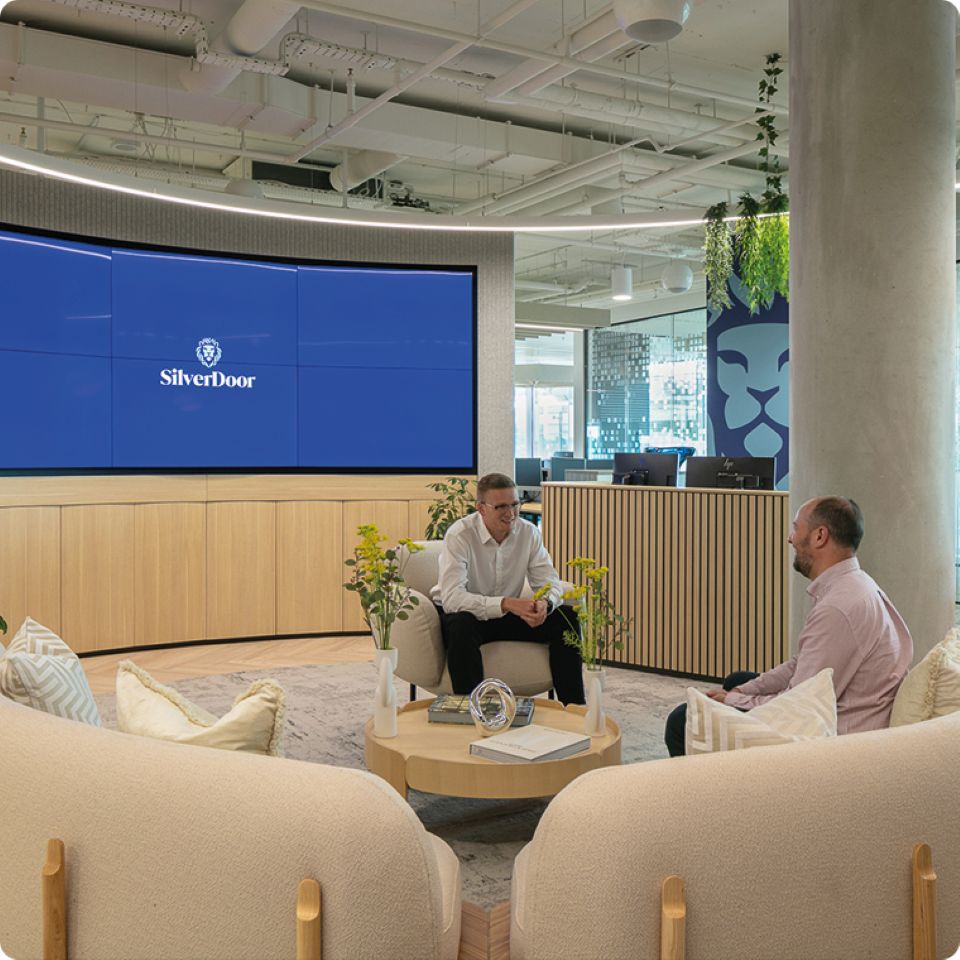
SilverDoor, the corporate accommodation provider, sought to create a workspace that reflected its service culture. Its new 15,000 sq ft headquarters in Chiswick Park adopts a hospitality-led approach: a concierge-style entrance, café-social hub and flexible zones for different workstyles. Natural light, acoustic balance and material warmth contribute to an atmosphere that feels both professional and relaxed.
The result is a workplace that supports connection, creativity and pride. As founder Marcus Angell said:
“We wanted to create the best possible space for our people, and we’ve achieved this together.”
Choice now defines the workplace. In a world of flexible schedules, the office must earn each visit through experience quality. Hospitality-led design helps achieve that by combining functionality with emotional intelligence.
To create workplaces that people choose, focus on:
• Ease of arrival. Begin every day with clarity and welcome.
• Balanced settings. Provide spaces for concentration, collaboration and pause.
• Material comfort. Use light, acoustics and texture to support well-being.
• Consistent cues. Align physical details with organisational values.
These principles turn space into an active part of culture, a place that feels cared for, and therefore encourages people to care in return.
Mapping the daily journey is the simplest starting point. Observe how people move, meet and rest. Identify moments that could feel more personal or intuitive. Small, evidence-based changes, better transitions, clearer zoning, a more welcoming entrance can have a disproportionate impact on satisfaction and engagement.


