


Download for free now
Thank you! Your submission has been received!
Oops! Something went wrong while submitting the form.


Workplace stress is not just a personal challenge, it is a strategic business concern. As pressure mounts, the impacts become tangible: burnout, reduced productivity, and higher staff turnover. So, how can workplace design reduce stress and promote a calmer, happier environment?
Work-related stress, depression and anxiety are the leading causes of workplace illness. In 2023/24, the HSE recorded 776,000 cases. These conditions accounted for 46% of all work-related ill health and 55% of all working days lost.
According to Deloitte, poor mental health now costs UK employers £51 billion annually. But the good news is that investing in mental well-being doesn’t just support people - it makes business sense too. For every £1 spent on well-being, businesses can expect to earn approximately £4.70 through reduced absenteeism, increased productivity, and improved employee retention.
Even small design choices can significantly influence how people feel at work. These six strategies offer practical ways to reduce stress and support mental clarity through calm office design.
.jpg)
Rest and social connection are important parts of the workday. They help create a culture that values workplace well-being. Mindfulness is no longer just a personal habit, it is becoming a workplace design principle.
At Clyde & Co, well-being rooms are available on every floor. These rooms support activities such as yoga, quiet reflection and one-to-one conversations.
Howden’s Manchester office has a coffee bar, client lounge, well-being room, and casual gathering areas. These spaces help staff and clients connect and relax.
At SilverDoor, the office features “The Den,” a vibrant space with pool tables, dartboards and tiered seating that encourages social recharge. Different people need different types of downtime. The goal is to provide choice: environments for quiet reflection, solo recharging or energising connection.
Design that supports task-based flexibility improves focus and reduces cognitive overload.
For economic consulting firm NERA, a BREEAM-rated London workspace was selected for its natural light and adaptable layout. Acoustic zones support deep focus, while collaboration areas encourage dynamic teamwork. Employees can choose the setting that suits their task and what works best for them.

A stressed body leads to a stressed mind, so designing for physical comfort is essential. This includes ergonomic furniture, adjustable desks and chairs, good air quality, and natural lighting. It also extends to the materials, layout and sensory experience that help people feel at ease in their environment.
At IDHL, the team prioritized physical comfort not just through functional elements, but also through form and feel. Soft curves, tactile finishes and a domestic aesthetic were used to establish a sense of calm. A fireplace and soft furnishings add familiarity and warmth.
Biophilic design, which reconnects people with nature, is proven to reduce stress and support cognitive function. This includes circadian lighting, organic materials, outdoor views and indoor greenery.
The Medical Protection Society in Leeds created a retreat space. It has high ceilings, a Juliet balcony, and natural light. This design aims to increase openness and lower sensory fatigue.
Visual clutter, noise, and overstimulation all contribute to workplace stress. Good design isn’t just about what you add but also what you take away. Clear layouts, smart storage solutions, and sound treatments like baffles, carpets, and partitions help reduce distractions. This creates a calmer and more focused environment.
At Allianz, open-plan areas have been carefully balanced with acoustic elements:
• Bookcases with integrated acoustic panels to divide spaces while reducing noise
• Semi-transparent partitions that preserve line-of-sight while reducing visual distraction
• Indoor planting to soften acoustics and support calm
• Acoustically treated ceiling and curtains for flexible focus zones
Colour psychology shapes how people feel and behave. Blues and greens support calm, while reds and oranges promote energy. Each tone influences how a space is experienced.
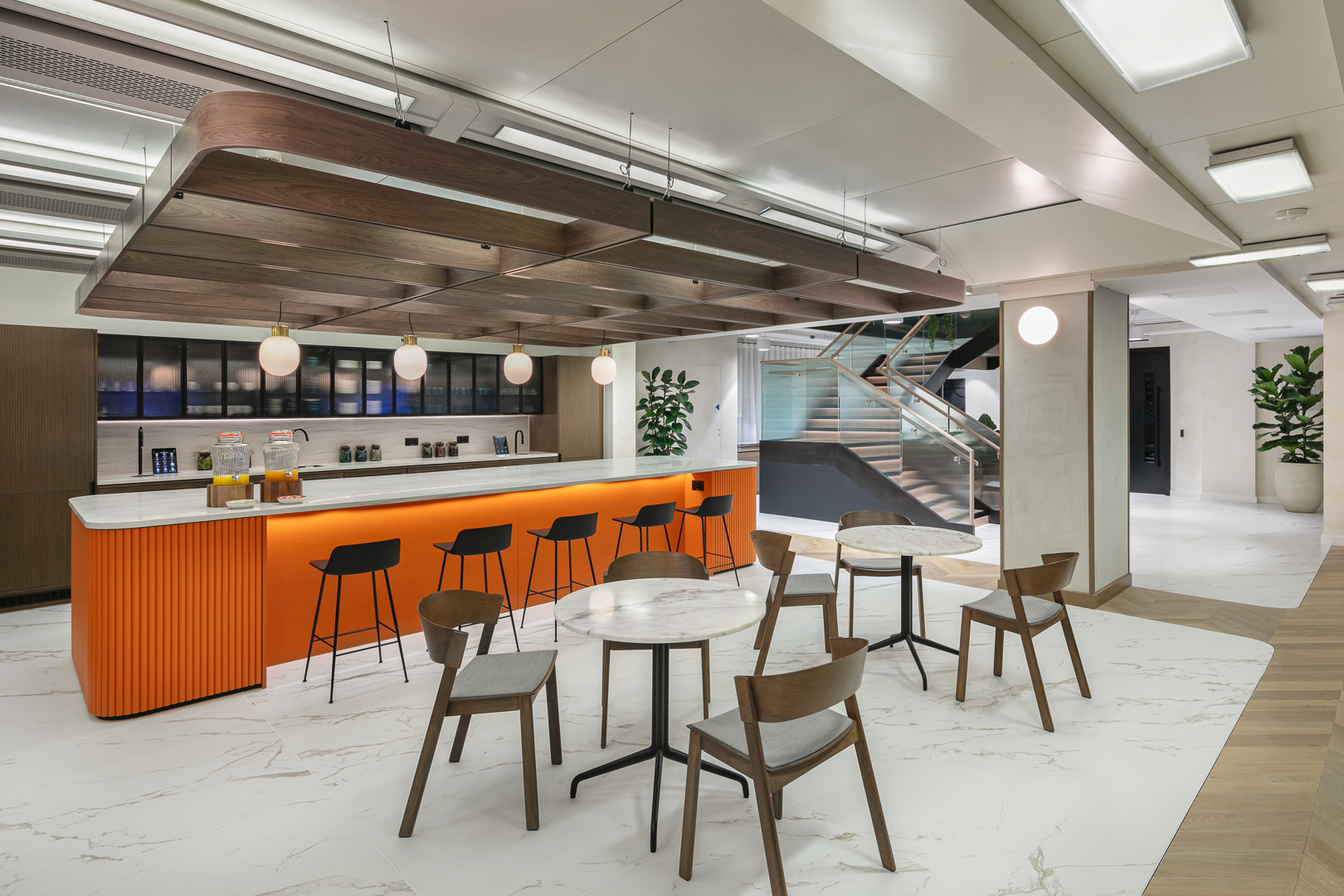
At Oliver Wyman, the residential, hospitality-inspired aesthetic brings comfort and warmth to the space - a growing trend as companies look to make offices feel more inviting. Terracotta tones and touches of brass add timeless elegance, while accents of green and biophilic elements introduce freshness and calm.
While 54% of employers claim they’ve asked employees what mental health support they need, only 15% of employees say they’ve actually been asked, according to research by Benenden Health.
Listening is essential. This can be done through surveys, workshops, or one-on-one talks as it helps create supportive environments for well-being.
Well-being does not come from a single feature or space. It requires holistic, human-centred thinking. At TSK, we design calm into our work. And when it is, the results are measurable - from happier teams to stronger business outcomes.
Want to explore how design can reduce stress and improve well-being in your workplace? Let’s talk.
Workplace stress is not just a personal challenge, it is a strategic business concern. As pressure mounts, the impacts become tangible: burnout, reduced productivity, and higher staff turnover. So, how can workplace design reduce stress and promote a calmer, happier environment?
Work-related stress, depression and anxiety are the leading causes of workplace illness. In 2023/24, the HSE recorded 776,000 cases. These conditions accounted for 46% of all work-related ill health and 55% of all working days lost.
According to Deloitte, poor mental health now costs UK employers £51 billion annually. But the good news is that investing in mental well-being doesn’t just support people - it makes business sense too. For every £1 spent on well-being, businesses can expect to earn approximately £4.70 through reduced absenteeism, increased productivity, and improved employee retention.
Even small design choices can significantly influence how people feel at work. These six strategies offer practical ways to reduce stress and support mental clarity through calm office design.
Rest and social connection are important parts of the workday. They help create a culture that values workplace well-being. Mindfulness is no longer just a personal habit, it is becoming a workplace design principle.
At Clyde & Co, well-being rooms are available on every floor. These rooms support activities such as yoga, quiet reflection and one-to-one conversations.
Howden’s Manchester office has a coffee bar, client lounge, well-being room, and casual gathering areas. These spaces help staff and clients connect and relax.
At SilverDoor, the office features “The Den,” a vibrant space with pool tables, dartboards and tiered seating that encourages social recharge. Different people need different types of downtime. The goal is to provide choice: environments for quiet reflection, solo recharging or energising connection.
Design that supports task-based flexibility improves focus and reduces cognitive overload.
For economic consulting firm NERA, a BREEAM-rated London workspace was selected for its natural light and adaptable layout. Acoustic zones support deep focus, while collaboration areas encourage dynamic teamwork. Employees can choose the setting that suits their task and what works best for them.
A stressed body leads to a stressed mind, so designing for physical comfort is essential. This includes ergonomic furniture, adjustable desks and chairs, good air quality, and natural lighting. It also extends to the materials, layout and sensory experience that help people feel at ease in their environment.
At IDHL, the team prioritized physical comfort not just through functional elements, but also through form and feel. Soft curves, tactile finishes and a domestic aesthetic were used to establish a sense of calm. A fireplace and soft furnishings add familiarity and warmth.
Biophilic design, which reconnects people with nature, is proven to reduce stress and support cognitive function. This includes circadian lighting, organic materials, outdoor views and indoor greenery.
The Medical Protection Society in Leeds created a retreat space. It has high ceilings, a Juliet balcony, and natural light. This design aims to increase openness and lower sensory fatigue.
Visual clutter, noise, and overstimulation all contribute to workplace stress. Good design isn’t just about what you add but also what you take away. Clear layouts, smart storage solutions, and sound treatments like baffles, carpets, and partitions help reduce distractions. This creates a calmer and more focused environment.
At Allianz, open-plan areas have been carefully balanced with acoustic elements:
• Bookcases with integrated acoustic panels to divide spaces while reducing noise
• Semi-transparent partitions that preserve line-of-sight while reducing visual distraction
• Indoor planting to soften acoustics and support calm
• Acoustically treated ceiling and curtains for flexible focus zones
Colour psychology shapes how people feel and behave. Blues and greens support calm, while reds and oranges promote energy. Each tone influences how a space is experienced.
At Oliver Wyman, the residential, hospitality-inspired aesthetic brings comfort and warmth to the space - a growing trend as companies look to make offices feel more inviting. Terracotta tones and touches of brass add timeless elegance, while accents of green and biophilic elements introduce freshness and calm.
While 54% of employers claim they’ve asked employees what mental health support they need, only 15% of employees say they’ve actually been asked, according to research by Benenden Health.
Listening is essential. This can be done through surveys, workshops, or one-on-one talks as it helps create supportive environments for well-being.
Well-being does not come from a single feature or space. It requires holistic, human-centred thinking. At TSK, we design calm into our work. And when it is, the results are measurable - from happier teams to stronger business outcomes.
Want to explore how design can reduce stress and improve well-being in your workplace? Let’s talk.

Workplace stress is not just a personal challenge, it is a strategic business concern. As pressure mounts, the impacts become tangible: burnout, reduced productivity, and higher staff turnover. So, how can workplace design reduce stress and promote a calmer, happier environment?
Work-related stress, depression and anxiety are the leading causes of workplace illness. In 2023/24, the HSE recorded 776,000 cases. These conditions accounted for 46% of all work-related ill health and 55% of all working days lost.
According to Deloitte, poor mental health now costs UK employers £51 billion annually. But the good news is that investing in mental well-being doesn’t just support people - it makes business sense too. For every £1 spent on well-being, businesses can expect to earn approximately £4.70 through reduced absenteeism, increased productivity, and improved employee retention.
Even small design choices can significantly influence how people feel at work. These six strategies offer practical ways to reduce stress and support mental clarity through calm office design.
Rest and social connection are important parts of the workday. They help create a culture that values workplace well-being. Mindfulness is no longer just a personal habit, it is becoming a workplace design principle.
At Clyde & Co, well-being rooms are available on every floor. These rooms support activities such as yoga, quiet reflection and one-to-one conversations.
Howden’s Manchester office has a coffee bar, client lounge, well-being room, and casual gathering areas. These spaces help staff and clients connect and relax.
At SilverDoor, the office features “The Den,” a vibrant space with pool tables, dartboards and tiered seating that encourages social recharge. Different people need different types of downtime. The goal is to provide choice: environments for quiet reflection, solo recharging or energising connection.
Design that supports task-based flexibility improves focus and reduces cognitive overload.
For economic consulting firm NERA, a BREEAM-rated London workspace was selected for its natural light and adaptable layout. Acoustic zones support deep focus, while collaboration areas encourage dynamic teamwork. Employees can choose the setting that suits their task and what works best for them.
A stressed body leads to a stressed mind, so designing for physical comfort is essential. This includes ergonomic furniture, adjustable desks and chairs, good air quality, and natural lighting. It also extends to the materials, layout and sensory experience that help people feel at ease in their environment.
At IDHL, the team prioritized physical comfort not just through functional elements, but also through form and feel. Soft curves, tactile finishes and a domestic aesthetic were used to establish a sense of calm. A fireplace and soft furnishings add familiarity and warmth.
Biophilic design, which reconnects people with nature, is proven to reduce stress and support cognitive function. This includes circadian lighting, organic materials, outdoor views and indoor greenery.
The Medical Protection Society in Leeds created a retreat space. It has high ceilings, a Juliet balcony, and natural light. This design aims to increase openness and lower sensory fatigue.
Visual clutter, noise, and overstimulation all contribute to workplace stress. Good design isn’t just about what you add but also what you take away. Clear layouts, smart storage solutions, and sound treatments like baffles, carpets, and partitions help reduce distractions. This creates a calmer and more focused environment.
At Allianz, open-plan areas have been carefully balanced with acoustic elements:
• Bookcases with integrated acoustic panels to divide spaces while reducing noise
• Semi-transparent partitions that preserve line-of-sight while reducing visual distraction
• Indoor planting to soften acoustics and support calm
• Acoustically treated ceiling and curtains for flexible focus zones
Colour psychology shapes how people feel and behave. Blues and greens support calm, while reds and oranges promote energy. Each tone influences how a space is experienced.
At Oliver Wyman, the residential, hospitality-inspired aesthetic brings comfort and warmth to the space - a growing trend as companies look to make offices feel more inviting. Terracotta tones and touches of brass add timeless elegance, while accents of green and biophilic elements introduce freshness and calm.
While 54% of employers claim they’ve asked employees what mental health support they need, only 15% of employees say they’ve actually been asked, according to research by Benenden Health.
Listening is essential. This can be done through surveys, workshops, or one-on-one talks as it helps create supportive environments for well-being.
Well-being does not come from a single feature or space. It requires holistic, human-centred thinking. At TSK, we design calm into our work. And when it is, the results are measurable - from happier teams to stronger business outcomes.
Want to explore how design can reduce stress and improve well-being in your workplace? Let’s talk.